
 Save
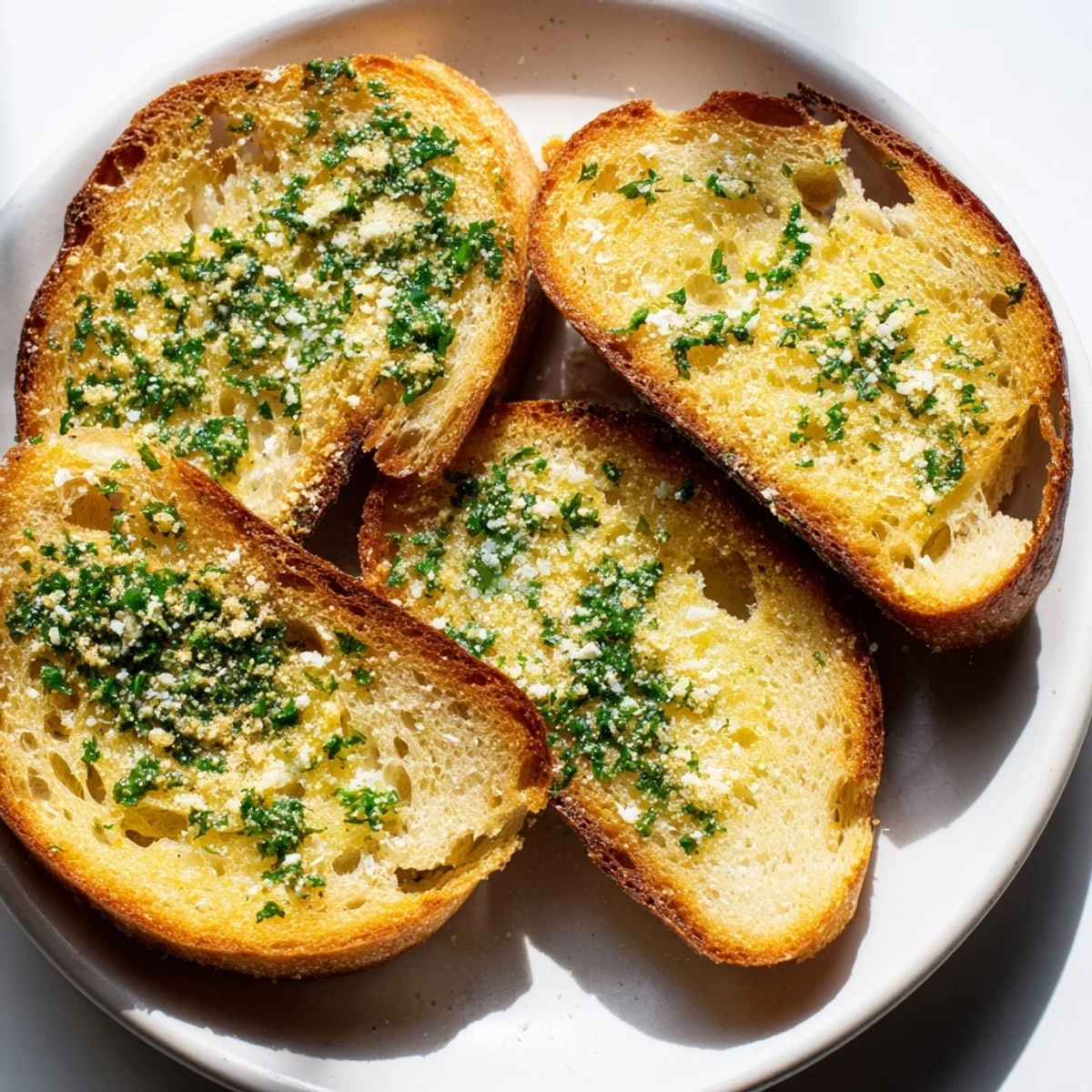
Save This dish features slices of rustic bread generously coated with a blend of softened butter, freshly minced garlic, and parsley. Baked until crisp and golden, it delivers a fragrant, buttery crunch. Ideal as a quick side or appetizer, this preparation can easily be adjusted with optional Parmesan or chili flakes to enhance flavor. Perfect accompaniment for soups, salads, or pasta dishes, it combines simple ingredients into a satisfying treat.
My neighbor showed up one evening with a plate of garlic toast still warm from her oven, and I realized I'd been overcomplicating something so simple my whole life. She'd toasted thick slices of Italian bread with nothing but softened butter mixed with fresh garlic and a whisper of parsley, and somehow it tasted like it belonged in a proper restaurant. I've made it dozens of times since then, and it's become the thing I reach for when I want to feel like I know what I'm doing in the kitchen.
I made this for a dinner party last spring when a guest arrived hungry before the main course was ready, and suddenly everyone was fighting over the last slice. That's when I understood the real magic here—it's not just food, it's something that bridges the awkward gap between arrival and the meal actually being served. Now it's my go-to move whenever people are coming over.
Ingredients
- Rustic or Italian bread: Look for something with actual structure—thin sandwich bread falls apart under the butter and heat, which defeats the whole purpose of getting crispy edges.
- Unsalted butter: Softened butter spreads without tearing the bread, and you control the salt level yourself, which makes a real difference in the final taste.
- Fresh garlic cloves: Minced fine, not crushed—big chunks burn before the bread toasts and taste bitter, while fine pieces mellow and flavor everything evenly.
- Fresh parsley: This isn't just decoration; it adds a brightness that keeps the garlic from feeling heavy and one-note.
- Salt and black pepper: Season the butter mixture itself, not the bread after toasting, so the flavors are integrated from the start.
- Parmesan cheese: Optional but genuinely worthwhile if you want something more substantial—add it the moment the toast comes out of the oven while the butter is still soft.
Instructions
- Heat your oven and prepare:
- Set the oven to 400°F and line a baking sheet with parchment paper so cleanup is effortless and nothing sticks. This temperature is hot enough to crisp the edges fast without burning the garlic butter.
- Make the garlic butter:
- Combine softened butter with minced garlic, chopped parsley, salt, and pepper in a small bowl and stir until it looks like a pale green paste with flecks throughout. The key is that the butter should be soft enough to mix smoothly—if it's cold, it'll tear the bread when you spread it.
- Spread generously and evenly:
- Use a spoon or butter knife to coat each bread slice in an even layer of the garlic mixture, pushing it into all the little crevices. More butter means more flavor and crispier edges, so don't hold back.
- Toast until golden:
- Place the slices butter-side up on the baking sheet and bake for 6 to 8 minutes until the edges turn golden and you can smell the garlic filling your whole kitchen. If you want extra crunch, switch to the broiler for 1 to 2 minutes after, but watch it closely because the line between perfectly crispy and burnt is about 30 seconds.
- Finish and serve:
- If you're using Parmesan, sprinkle it on immediately after pulling the toast from the oven while the butter is still warm enough to help it stick. Serve while it's still warm, ideally within a few minutes.
 Save
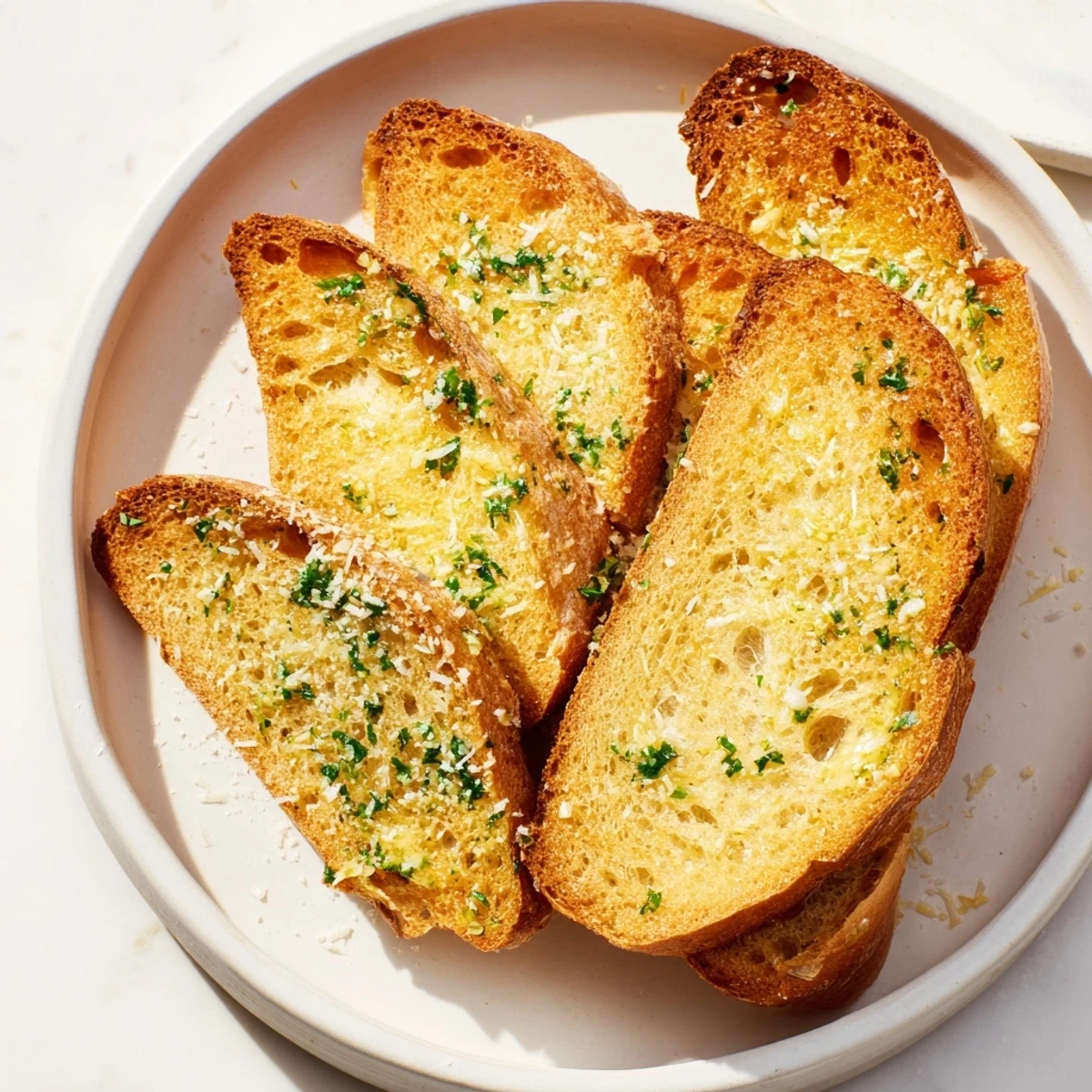
Save A friend's young daughter once asked for a second piece of my garlic toast before I even sat down to eat my own, and that moment made me realize how simple food done right is sometimes the most memorable. It's taught me that you don't need complicated techniques or fancy ingredients to make something people genuinely want more of.
The Bread Matters More Than You Think
Not all bread is created equal for this recipe. A dense, crusty loaf with some chew to it will hold up to the butter and toasting without falling apart, while thin or soft bread turns soggy no matter how careful you are. I learned this the hard way by accidentally grabbing sandwich bread once, and the whole thing was disappointing. If you can find a bakery with fresh Italian or ciabatta bread, that's your best bet, though a good quality grocery store loaf works fine too.
Why Fresh Parsley Transforms This
Dried parsley tastes dusty and hollow in comparison, and when the toast is done in under 10 minutes, you're not getting much cooking time to develop any flavor anyway. Fresh parsley brings a clean, grassy note that cuts through the richness of the butter and keeps your palate from getting tired of the garlic. It also looks better and feels more intentional, which might sound silly but genuinely affects how good something tastes.
Serving and Storage Tips
Garlic toast is best served immediately while the toast is still crispy and warm, because once it cools it loses that textural magic. If you need to make it ahead, you can prepare the garlic butter mixture up to a day in advance and spread it on the bread right before baking. Any leftover toast can be stored in an airtight container for a day, though reheating it in a 300°F oven for a few minutes will restore some of the crispness that the fridge steals away.
- Make the garlic butter ahead and store it in the fridge—it actually tastes better after the flavors have melded together overnight.
- Don't assemble the bread until you're ready to bake, or it'll start soaking up moisture and turn limp.
- If you're serving a crowd, bake in batches so you always have hot toast coming to the table.
 Save
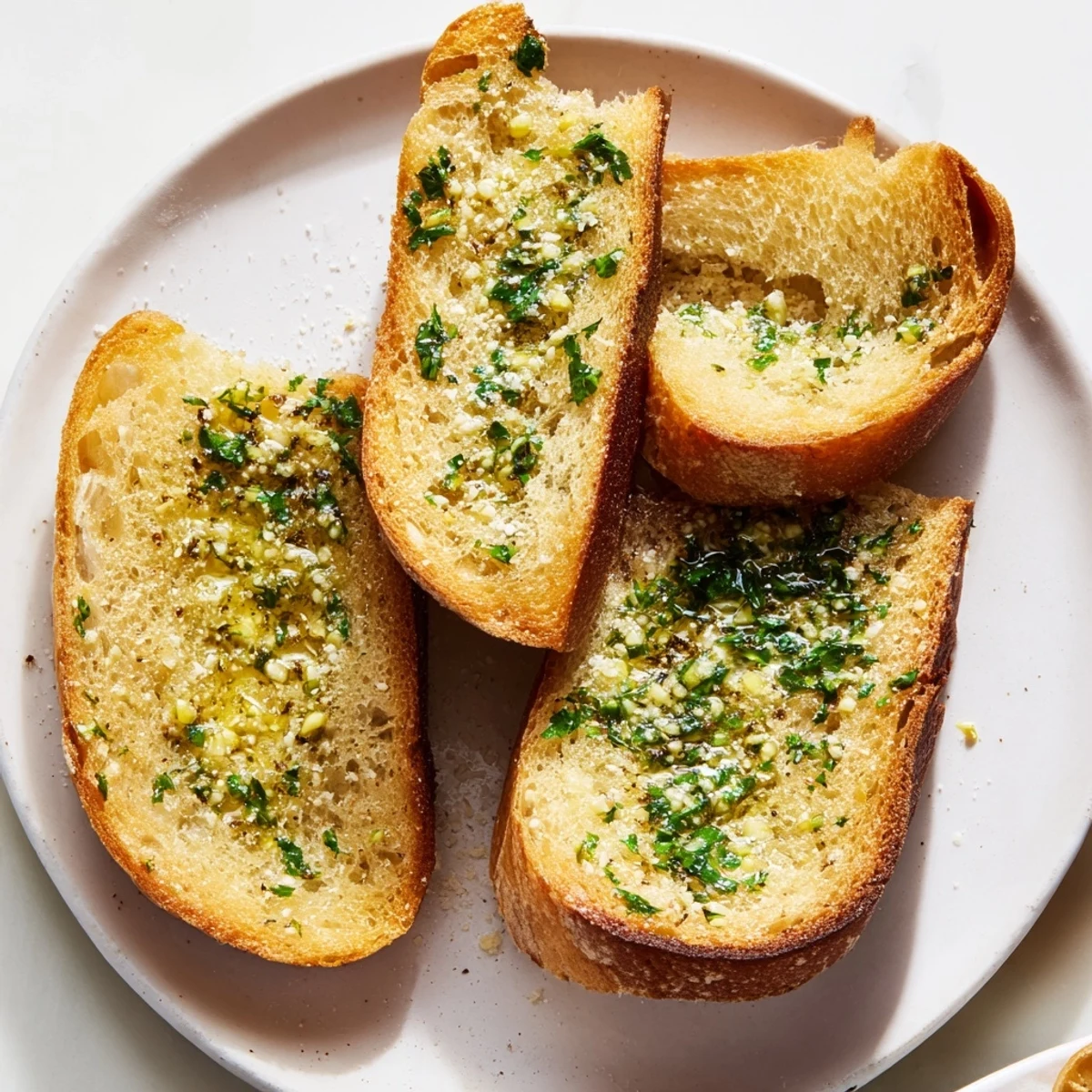
Save This recipe taught me that sometimes the most satisfying cooking moments come from mastering something straightforward, not from tackling something complicated. It's become my proof that patience, good ingredients, and attention to detail matter way more than effort.
Recipe FAQ
- → What type of bread is best for this dish?
-
Rustic or Italian bread works best as it holds the garlic butter well and crisps nicely in the oven.
- → Can this be made vegan?
-
Yes, swap the butter with a vegan margarine alternative for a dairy-free variation.
- → How do you get the bread crispy?
-
Baking at 400°F until golden and broiling briefly at the end helps achieve a crisp exterior.
- → Is Parmesan necessary?
-
Parmesan is optional; it adds a savory touch but can be omitted if desired.
- → Can this be customized with spices?
-
Yes, adding chili flakes can provide a subtle spicy kick to the garlic butter spread.