
 Save
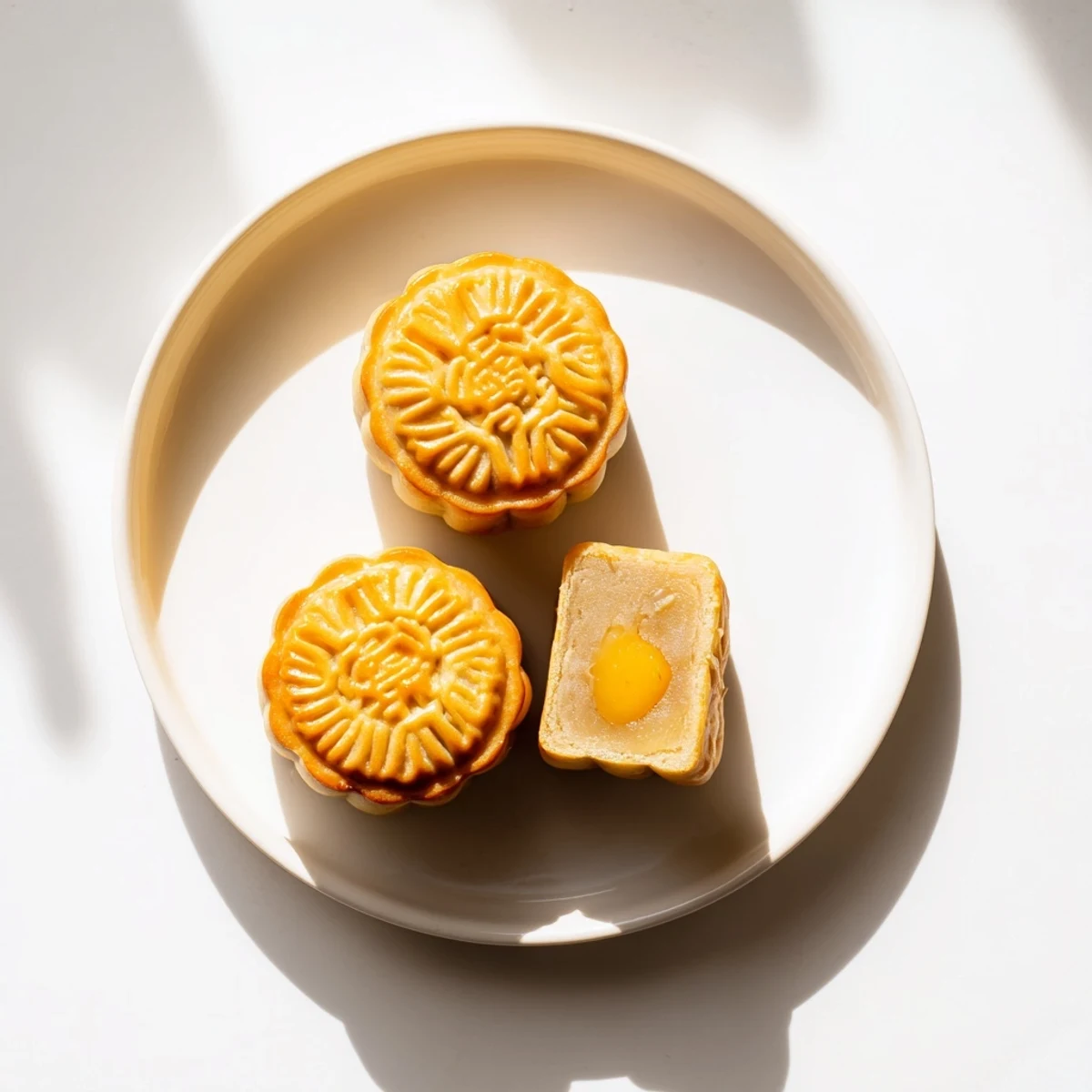
Save Master the art of creating these iconic Chinese pastries with a rich, sweet lotus seed filling encased in a golden, tender pastry shell. This authentic preparation yields beautifully shaped mooncakes featuring intricate traditional designs and a dense, satisfying texture.
The process involves working with golden syrup and alkaline water to achieve the characteristic mooncake skin that softens beautifully after resting. Each pastry encases a generous portion of smooth lotus paste, with optional salted egg yolk centers for the traditional experience.
The technique requires patience during dough resting and careful molding to create the signature patterns that make these pastries instantly recognizable. A final egg wash glaze produces the appetizing golden-brown finish.
These handheld treats pair wonderfully with Chinese tea and develop their ideal texture after 1-2 days of storage, making them excellent for preparing ahead of festive gatherings.
The golden syrup perfumed my entire kitchen the first time I attempted mooncakes, that distinctive honeyed scent announcing something special was happening. My grandmother had told me stories about the Mid-Autumn Festival, family gatherings under lantern-lit skies, but making these intricate pastries felt like bridging centuries with my own hands. The dough was stubborn that first year, cracking when I tried sealing it around the filling. Three tries later, I learned patience is as essential as the alkaline water in the dough.
Last autumn, my neighbor asked what smelled like honeyed heaven wafting through our building's vents. I brought over a fresh batch still warm from the oven, and she immediately asked for the recipe. We spent the afternoon pressing mooncakes together, her children fascinated by how the dough transformed in the molds. Now it's become our yearly tradition, gathering to shape and bake while sharing stories under whatever moon we can see through city lights.
Ingredients
- Golden syrup: This thick amber syrup is the heart of mooncake dough, creating that signature tender skin and subtle caramel sweetness. Avoid substituting with honey or corn syrup. The specific viscosity matters immensely.
- Alkaline water: Also called kansui or lye water, this gives the dough its characteristic golden color and springy texture. A tiny amount goes a long way. Use food-grade specifically meant for baking.
- Lotus seed paste: The traditional filling with a smooth, slightly sweet profile and earthy undertones. Good quality paste makes all the difference. Avoid brands with excessive oil separation.
- Salted egg yolks: These create the coveted golden center reminiscent of the full moon. Look for yolks that are firm and oily, not crumbly or dry.
- All-purpose flour: Regular wheat flour provides structure while remaining tender after the resting period. The dough needs this rest time to hydrate properly.
Instructions
- Prepare your space:
- Clear your counter completely. This recipe requires focus and clean surfaces. Preheat oven to 180°C (350°F) and line a baking sheet with parchment paper. Have your mooncake mold ready, dusted with flour to prevent sticking.
- Mix the dough base:
- Whisk golden syrup, vegetable oil, and alkaline water until completely emulsified. The mixture should look smooth and glossy. This step is crucial for proper texture development.
- Form the dough:
- Add flour to the wet mixture and stir gently until a soft dough forms. Do not overmix. Cover with plastic wrap and let rest for 30 minutes minimum. This rest period is non-negotiable.
- Prepare the filling:
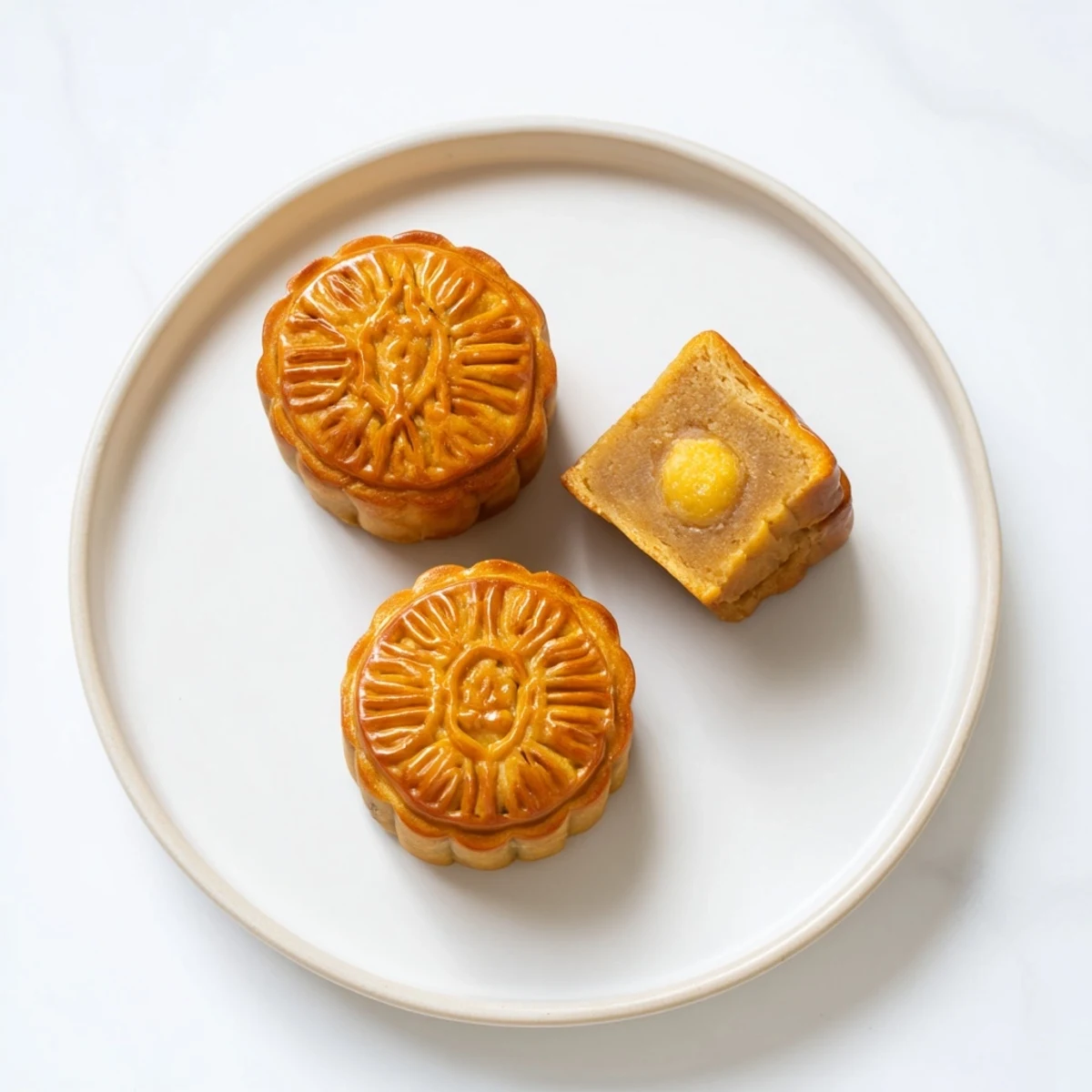
- Divide lotus paste into 12 equal portions, approximately 40g each. If using salted yolks, embed one yolk into the center of each paste ball, reshaping to completely encase the yolk. The paste should seal completely around it.
- Portion the dough:
- Divide rested dough into 12 equal pieces, roughly 25g each. Keep covered while working to prevent drying. The dough will feel slightly tacky but should not stick excessively to your hands.
- Wrap the filling:
- Flatten one dough piece into a disc, keeping the center slightly thicker than the edges. Place a filling ball in the center and gradually work the dough upward, sealing completely. The dough should be evenly thin without tearing.
- Shape the mooncakes:
- Lightly dust each filled ball with flour. Place into your prepared mold, press firmly but gently, then invert onto the baking sheet. The design should release cleanly and retain sharp edges.
- Initial bake:
- Bake for exactly 5 minutes. Remove from oven and let cool for 10 minutes on the tray. This short bake sets the structure before glazing.
- Apply the glaze:
- Whisk egg yolk with one tablespoon water until smooth. Brush a very thin layer over each mooncake. Avoid pooling glaze in the design crevices. Less is more here.
- Finish baking:
- Return to oven for 15-20 minutes until golden brown. The color should be even across all surfaces. Let cool completely on the baking sheet. Mooncakes are fragile when hot.
- The waiting game:
- Store in an airtight container for 1-2 days before serving. This resting period allows the skin to soften and the flavors to mature. Freshly baked mooncakes have a different, firmer texture.
 Save
Save My father called me after receiving a care package I'd mailed across the country, his voice soft as he described biting into a mooncake and suddenly being transported back to his childhood in Shanghai. Food does that, carries memories across oceans and decades in ways nothing else can. Now I make double batches, one for keeping and one for sharing, because these pastries are meant to connect us to something larger than ourselves.
Understanding The Dough
Mooncake dough behaves differently than any other pastry I've worked with. The alkaline water creates a unique protein structure that becomes tender over time rather than toughening up. This is why fresh mooncakes have a firmer bite, while rested ones achieve that signature soft yielding texture. The dough also darkens naturally during baking, developing that rich golden hue without additional coloring.
Mastering The Mold
Traditional wooden molds require a light dusting of flour in every crevice, while plastic press molds need less flour but more attention to even pressure. The key is pressing firmly enough to capture sharp details but not so hard that the filling oozes out. Practice with one or two test pieces to find the right pressure with your particular mold.
Filling Variations
Beyond traditional lotus paste, the filling possibilities are endless once you understand the proportions. Red bean paste offers earthy sweetness, while black sesame adds nutty depth. Modern interpretations incorporate taro, durian, or even chocolate truffle centers. Just keep the filling portion at roughly 40g and maintain the same wrapping technique.
- Homemade paste will have a fresher flavor than store-bought, though it requires significant prep time
- If your paste is too soft, refrigerate for 30 minutes before portioning
- Roll filling balls between lightly oiled palms to prevent sticking
 Save
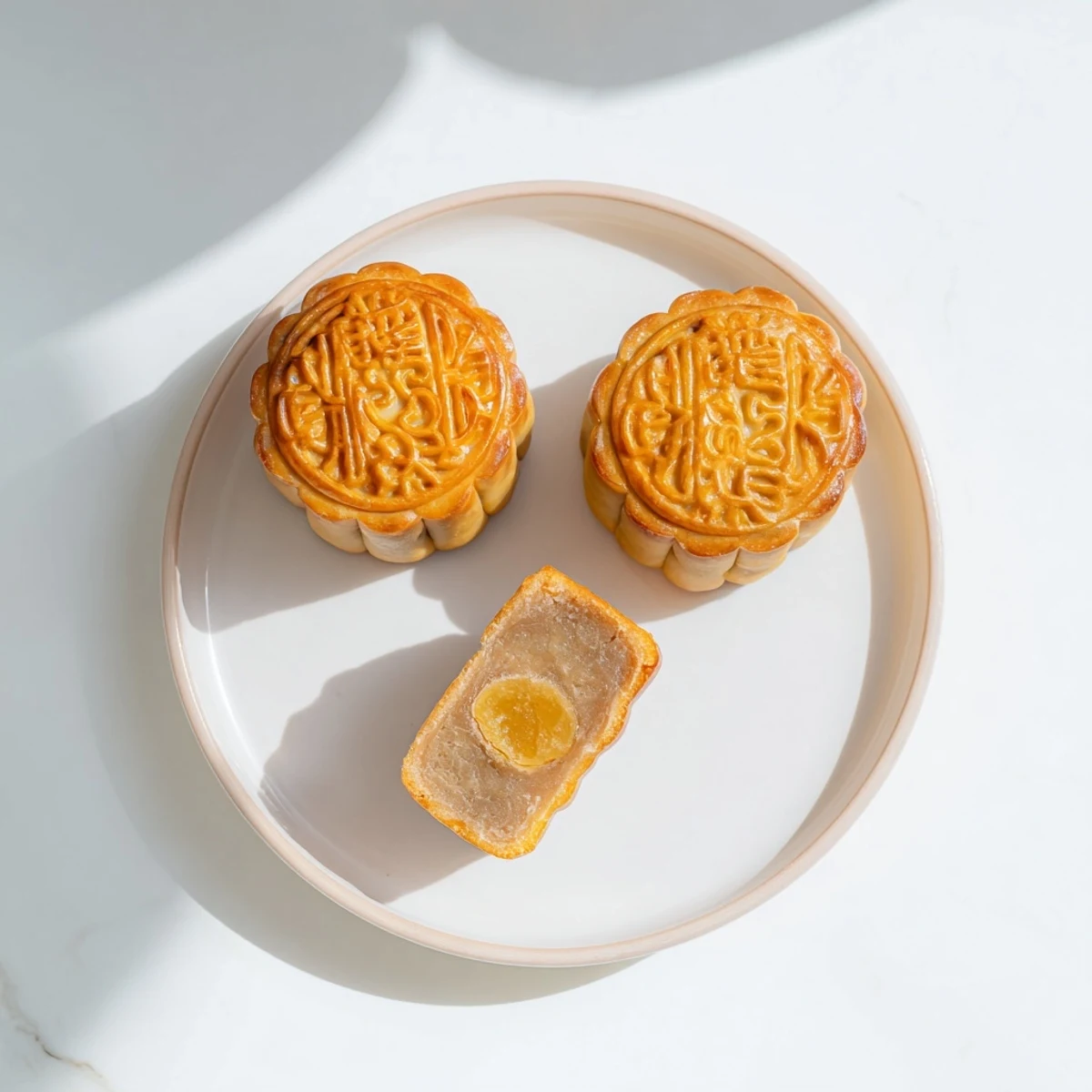
Save These mooncakes carry centuries of tradition in every golden bite, yet making them feels wonderfully personal and immediate. I hope they become part of your own autumn rituals, connecting you to something ancient and new all at once.
Recipe FAQ
- → What makes traditional Chinese mooncakes unique?
-
The distinctive combination of golden syrup-based dough with alkaline water creates a tender yet sturdy pastry that develops a characteristic soft, shiny skin after resting. The dense, sweet lotus seed filling provides a rich, luxurious texture that balances perfectly with the subtle pastry shell.
- → Can I make mooncakes without a traditional mold?
-
While traditional molds create the classic intricate patterns, you can shape mooncakes by hand or use small tartlet presses. The pastries will taste delicious though they'll lack the decorative designs. Silicone molds with simpler patterns offer a more accessible alternative to wooden traditional presses.
- → Why do mooncakes need to rest after baking?
-
Resting allows the moisture from the filling to redistribute into the pastry, creating the signature soft, slightly chewy texture that traditional mooncakes are known for. Freshly baked mooncakes tend to have crisper skins, while aged ones develop the characteristic tender mouthpiece.
- → What fillings work well in mooncakes?
-
Traditional lotus seed paste remains the most popular choice, offering a smooth, subtly sweet flavor. Red bean paste provides earthier notes, while black sesame paste adds nutty richness. Modern variations include durian, green tea, or even custard fillings for contemporary twists.
- → How should I store mooncakes?
-
Store cooled mooncakes in an airtight container at room temperature for up to two weeks. The pastry will soften and develop better texture during this time. For longer storage, refrigerate for up to a month or freeze for several months, though this may affect the delicate skin texture.
- → What is alkaline water and why is it essential?
-
Alkaline water (lye water) provides the distinctive golden color and helps neutralize the acidity in golden syrup, creating the traditional mooncake texture. It also contributes to the pastry's ability to develop the characteristic soft skin after resting. Small amounts are sufficient—typically just one teaspoon per batch.