
 Save
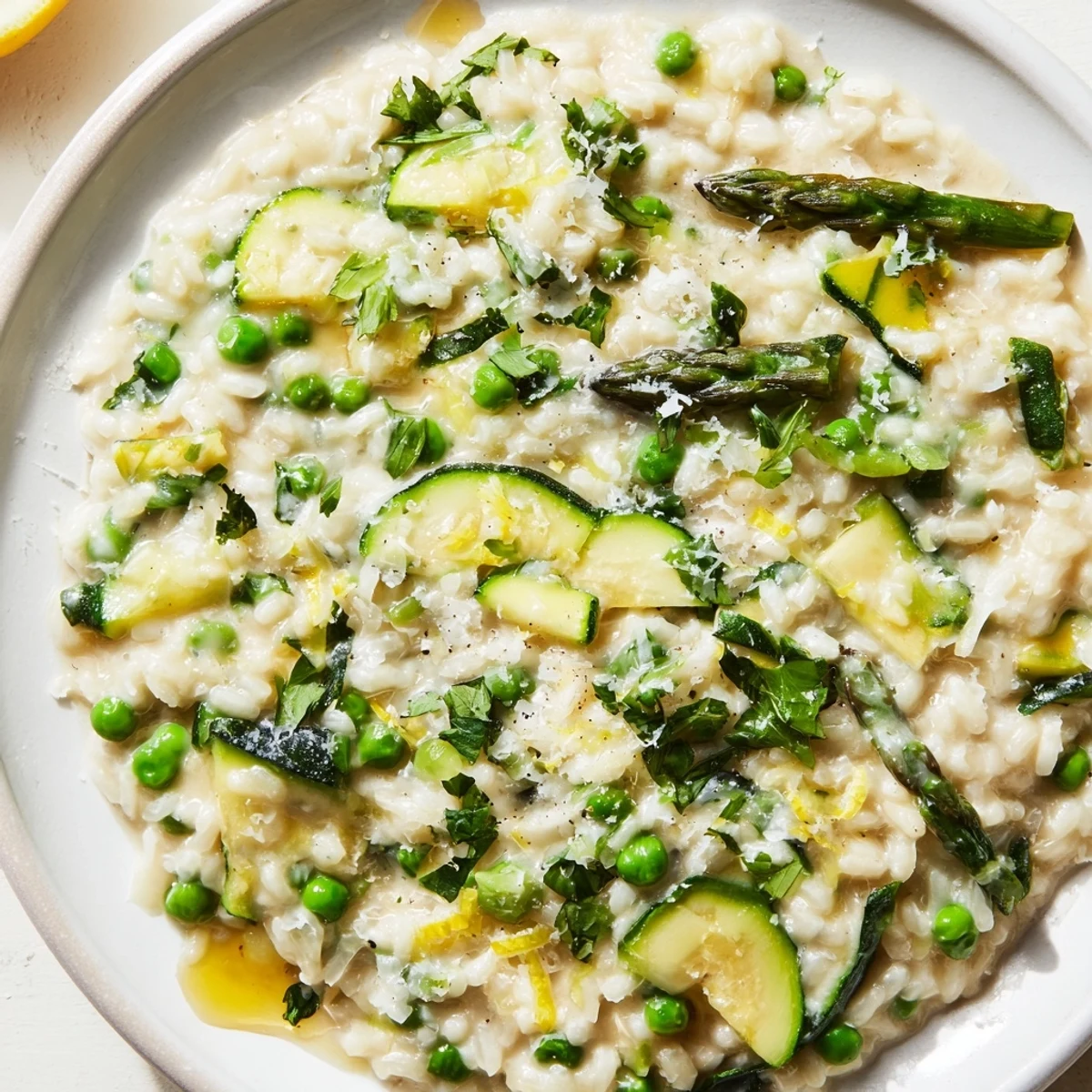
Save This creamy dish features Arborio rice slowly cooked with a medley of spring vegetables like asparagus, peas, zucchini, and spinach. Aromatics like shallot, leek, and garlic create a savory base, while lemon zest and juice add a fresh, zesty brightness. The risotto is finished with Parmesan cheese, butter, and fresh herbs to balance richness with freshness. It’s gluten-free if prepared with certified broth, offering a vibrant and well-rounded vegetarian option perfect for a satisfying main course.
Last spring, I found myself at the farmers market surrounded by piles of asparagus and fresh peas, feeling that familiar urge to capture the season in a bowl. I came home with an armful of vegetables and decided to finally master risotto, something I had been intimidated by for years. After my first attempt turned out perfectly creamy, I understood why people stand at the stove stirring for twenty minutes. The transformation from hard grains to something luxurious is worth every moment of attention.
I made this for friends on a rainy April evening when we all needed something comforting but not heavy. Everyone went quiet after the first bite, which I have learned is the best kind of compliment. One friend asked for thirds and then immediately asked for the recipe, saying it was exactly what she didnt know she needed.
Ingredients
- Arborio rice: This high starch rice is essential for creating that signature creamy texture without adding cream
- Vegetable broth: Keeping it warm prevents shocking the rice and maintains steady cooking temperature
- Spring vegetables: Asparagus, peas, zucchini, and spinach capture the season perfectly but you can adapt based on what looks fresh
- Lemon: Both zest and juice cut through the richness and make the whole dish feel lighter
- White wine: Adds depth and acidity that balances the butter and cheese
- Butter and olive oil: The combination prevents the butter from burning while adding flavor
- Parmesan: Use freshly grated for the best melting and seasoning
Instructions
- Warm the broth:
- Keep your vegetable broth simmering in a separate pan so it is ready when needed throughout cooking
- Build the foundation:
- Heat olive oil and butter together, then cook shallot, leek, and garlic until softened and fragrant but not browned
- Toast the rice:
- Add the Arborio rice and stir constantly for a minute or two until the grains look slightly translucent at the edges
- Deglaze with wine:
- Pour in the white wine and keep stirring until the rice has absorbed every bit of liquid
- Add broth gradually:
- Add one ladle of warm broth at a time, stirring frequently and waiting until each addition is mostly absorbed before adding more
- Add vegetables:
- About halfway through cooking, stir in asparagus, zucchini, and peas so they cook until tender but stay bright
- Finish with brightness:
- When rice is al dente, fold in spinach, lemon zest, and juice, cooking just until spinach wilts
- Create the creaminess:
- Remove from heat and stir in Parmesan, remaining butter, and fresh herbs until melted and glossy
 Save
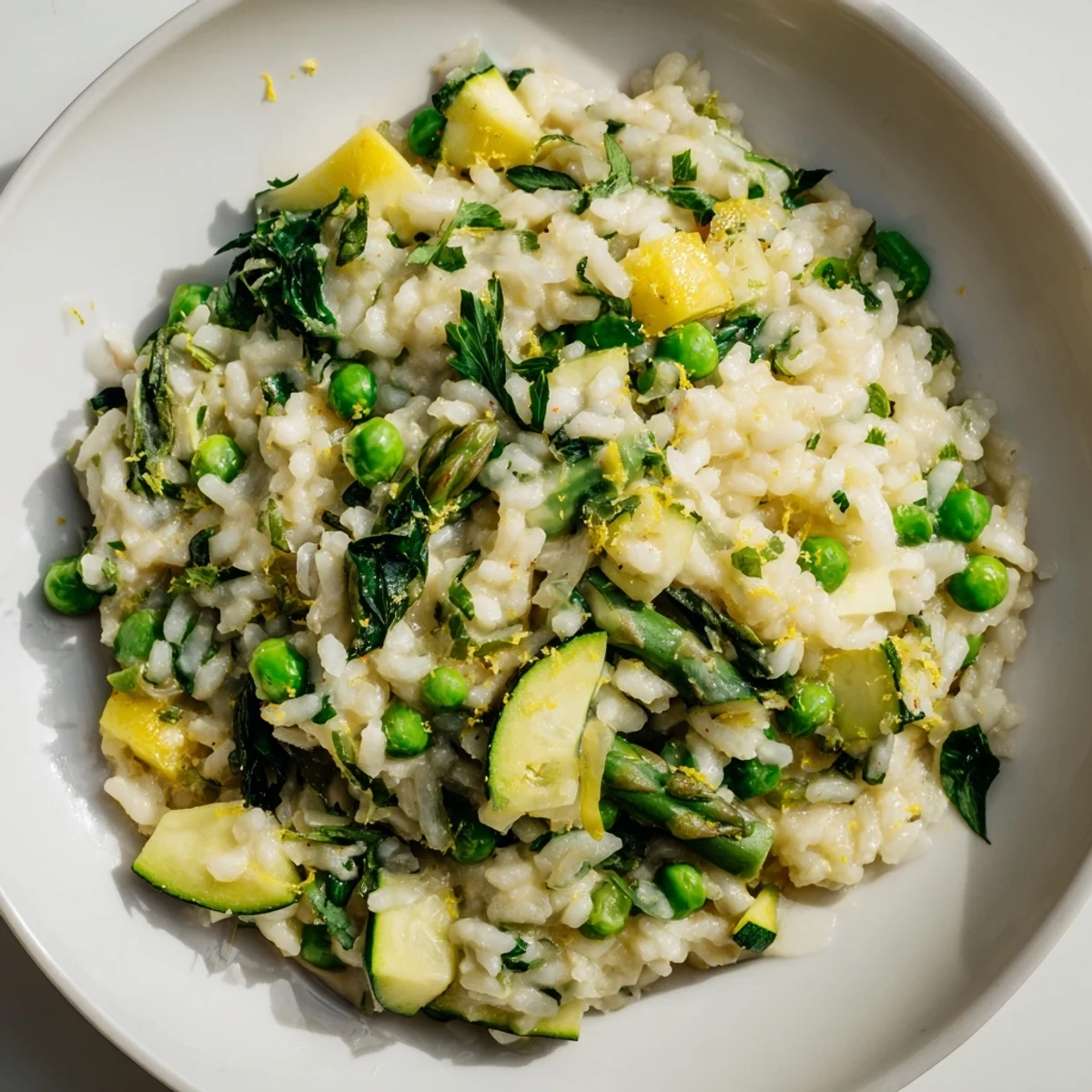
Save This risotto has become my go to when I want to feed people something that feels special without requiring hours of preparation. There is something about the rhythm of stirring and watching the vegetables turn bright green that feels like a small act of care.
The Art of Risotto
Risotto teaches patience more than any other dish I know. You cannot rush it, but that is part of its charm. The process demands you stay present, adding broth, stirring, watching the transformation happen gradually. I have come to enjoy those twenty minutes at the stove as a time to decompress while dinner comes together.
Choosing Your Vegetables
The beauty of this recipe is how adaptable it is to whatever looks best at the market. Sugar snap peas, fava beans, or even diced artichokes work beautifully here. The key is cutting everything into bite sized pieces so they cook evenly and finish around the same time as the rice.
Making It Your Own
Once you are comfortable with the basic technique, you can take this in so many directions. Swap the vegetables, try different herbs, or add a handful of fresh basil at the very end. Sometimes I stir in a dollop of ricotta for extra creaminess, or top with toasted pine nuts for crunch.
- Leftovers reheat surprisingly well with a splash of broth and a gentle stir
- The risotto will thicken considerably as it sits, so you may want to loosen it when reheating
- For a dinner party, you can prep all ingredients in advance and start cooking when guests arrive
 Save
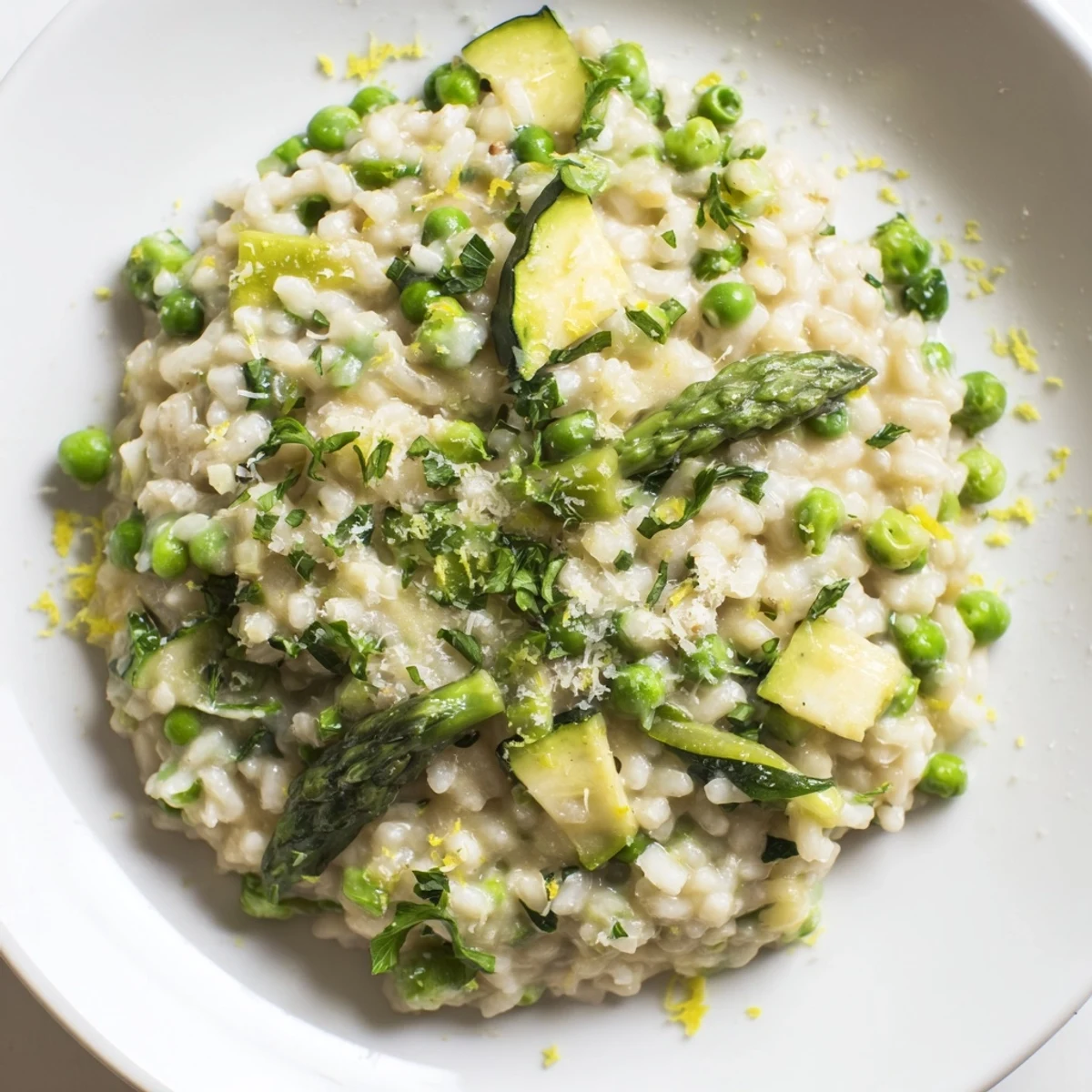
Save I hope this becomes one of those recipes you turn to again and again, adapting it to the seasons and making it your own. There is something deeply satisfying about transforming simple ingredients into something this beautiful and comforting.
Recipe FAQ
- → What vegetables work best in this dish?
-
Asparagus, peas, zucchini, baby spinach, and leeks combine to provide fresh spring flavors and a variety of textures that cook evenly in the risotto.
- → How is the lemon incorporated to enhance flavor?
-
Lemon zest and freshly squeezed lemon juice are stirred in towards the end to add a bright, zesty note that balances the creamy richness.
- → Can I use a different grain instead of Arborio rice?
-
For traditional creamy texture, Arborio rice is recommended. Other short-grain rices may work but expect different creaminess and cooking times.
- → What type of broth is best for this preparation?
-
Low-sodium vegetable broth keeps flavors fresh and balanced, allowing the vegetables and lemon to shine without overpowering the dish.
- → How can I make this dish vegan-friendly?
-
Substitute butter with plant-based alternatives and omit Parmesan or use a vegan cheese substitute to maintain a creamy texture without dairy.
- → What wine pairs well with this dish?
-
A crisp white wine such as Sauvignon Blanc or Pinot Grigio complements the bright lemon and fresh vegetable flavors nicely.