
 Save
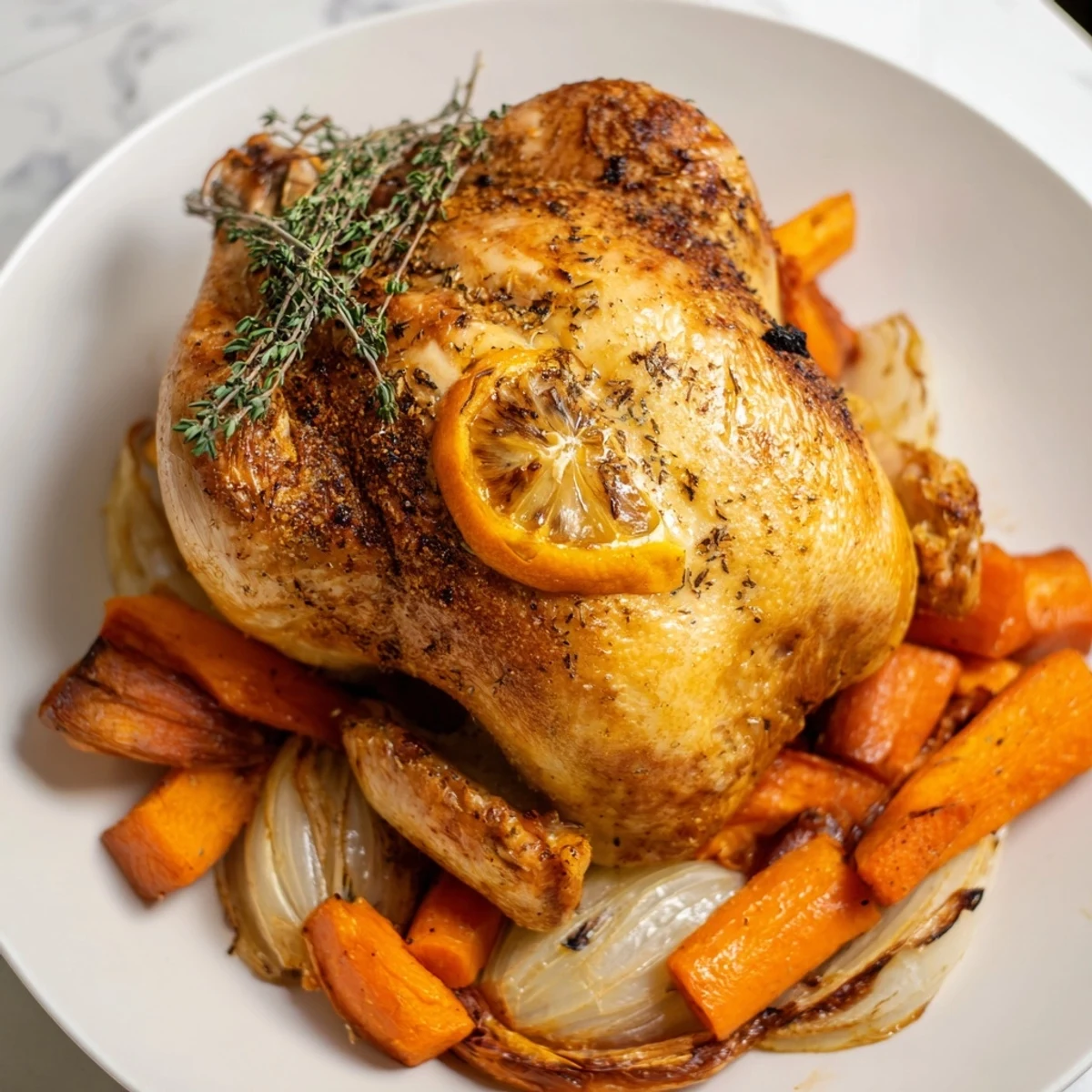
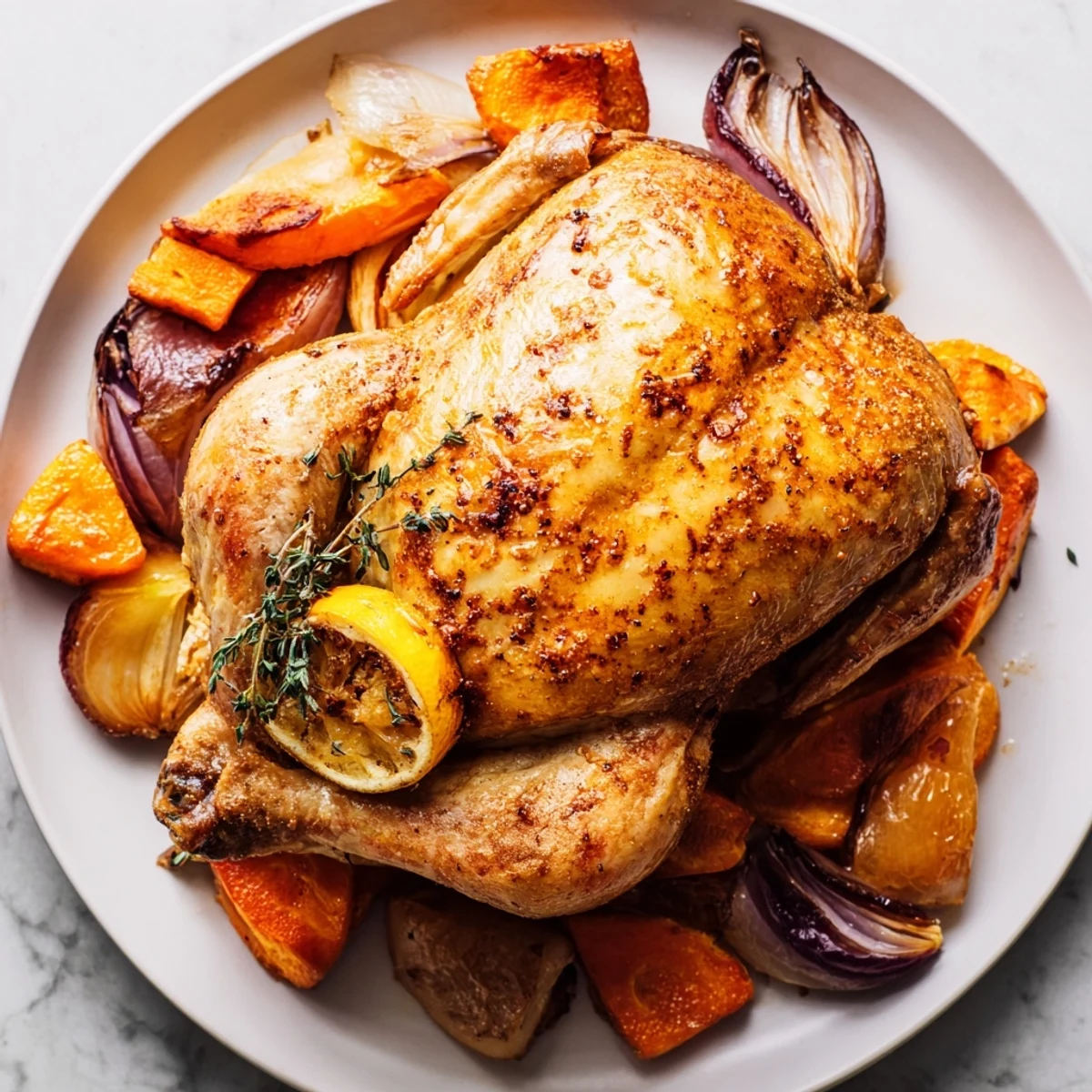
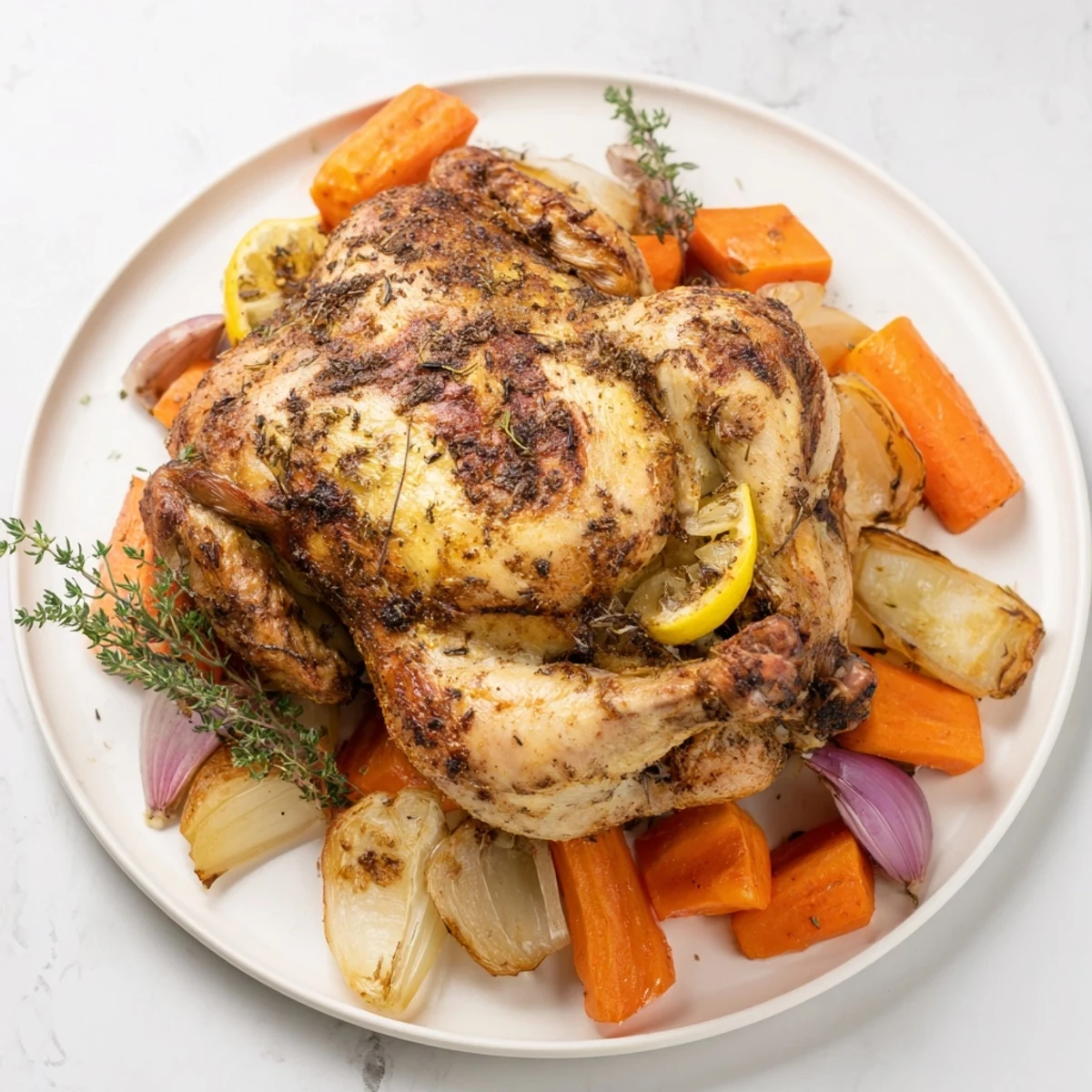
Save This dish highlights a whole chicken roasted to perfection, infused with fresh thyme and garlic. The preparation involves seasoning the bird with olive oil, salt, and pepper, and stuffing it with lemon, thyme, and garlic to enhance flavor. Roasting alongside onions and carrots creates a delicious, aromatic combination. Techniques like resting the meat after roasting ensure juicy results and crisp skin, making it a comforting classic suitable for any dinner.
I'll never forget the first time I roasted a whole chicken properly. I was at my grandmother's kitchen in Lyon, watching her pull a golden bird from the oven with such confidence, the thyme releasing its perfume into the warm air. She simply said, "Never rush a good chicken—let it breathe, let it rest." That lesson changed everything about how I approach this dish. Now, whenever I roast chicken with thyme and garlic, I'm transported back to that moment, and I understand why this simple preparation has been a cornerstone of French cooking for generations.
I made this for my daughter's twentieth birthday dinner, just her and me at the kitchen table with candles and this roasted chicken as the centerpiece. She took one bite and said, "This tastes like home," and I realized that's exactly what good food should do—it should taste like safety and love and someone who cares enough to get it right.
Ingredients
- 1 whole chicken (about 1.6 kg / 3.5 lbs): This is your canvas. Choose one that's plump and pale, and let it come to room temperature for 20 minutes before cooking—it roasts more evenly this way
- 6 sprigs fresh thyme: The soul of this dish. Fresh is non-negotiable here; dried thyme becomes bitter and one-dimensional. Half goes inside, half decorates the pan for pure flavor
- 4 cloves garlic, smashed: Smashing, not mincing, mellows the garlic and lets it perfume the bird from within without overpowering it
- 1 lemon, halved: This brightens the meat, keeps it moist, and fills the cavity with steam that helps everything cook gently
- 2 medium onions, quartered: These create a flavorful base and caramelize beautifully, becoming sweet and jammy by the end
- 2 carrots, cut into large chunks: They absorb all the chicken's juices and become almost candied—honestly, these are worth making the dish for alone
- 2 tbsp olive oil: This creates the mahogany skin everyone dreams about. Don't skimp; it's the difference between golden and pale
- 1 tsp kosher salt: Use kosher salt, which distributes more evenly than table salt and won't make the skin bitter if you oversalt slightly
- 1/2 tsp black pepper: Freshly cracked, always. Stale pepper tastes like dust compared to the real thing
- 1/2 cup dry white wine or chicken broth: For basting—this keeps the pan from drying out and adds depth to the pan juices you'll pour over everything
Instructions
- Prepare your space and oven:
- Preheat your oven to 200°C (400°F) and position the rack in the lower third—this ensures the bottom of the chicken cooks through while the top gets gorgeously bronzed. Remove any giblets from the chicken's cavity, then pat the bird completely dry with paper towels. This dryness is your secret weapon for crispy skin; moisture is the enemy of crispness.
- Season generously:
- Rub the entire chicken—under the wings, along the thighs, everywhere—with olive oil, kosher salt, and pepper. Get under the skin where you can; don't be shy. This is where seasoning happens, not just on the surface.
- Stuff with intention:
- Nestle the lemon halves, 4 sprigs of fresh thyme, and 2 smashed garlic cloves into the cavity. These will steam the bird from the inside while perfuming the meat. It's like giving the chicken a spa treatment from within.
- Build your flavor base:
- In a roasting pan, scatter the quartered onions, carrot chunks, remaining thyme sprigs, and 2 more smashed garlic cloves. This becomes your aromatic bed—the chicken sits like a queen on her throne, and everything underneath catches the drippings and transforms into liquid gold.
- Position and secure:
- Place the chicken breast-side up on this vegetable bed. Tuck the wing tips under the bird's body so they don't burn. If you want, tie the legs together with kitchen twine—it keeps everything compact and makes carving easier later. I usually skip this step for home cooking; it's not necessary.
- Roast with patience:
- Slide the pan into your preheated oven. Set a timer for 1 hour and 15 minutes. After about 45 minutes, pull it out and baste—use a spoon to scoop those pan juices and pour them over the chicken. If the pan looks dry, splash in some white wine or broth. This keeps everything moist and builds deeper flavor. Return it to the oven and let it finish cooking.
- Check for doneness:
- When the timer goes off, pierce the thigh with a sharp knife—the juices that run out should be completely clear, with no pink. If you're using a meat thermometer (I love having one), the thickest part of the thigh should read 74°C (165°F). This guarantees safety and perfect cooking.
- Rest like it matters:
- Remove the chicken from the oven and tent it loosely with foil. Let it rest for a full 10 minutes. This is crucial—the meat is still cooking slightly from residual heat, and the juices redistribute throughout, making every bite tender and juicy. Don't skip this step thinking you're saving time; you're actually investing in the best texture.
- Serve with ceremony:
- Transfer the chicken to a cutting board. Scoop the roasted vegetables and all those precious pan juices into a serving bowl or small pitcher. Carve the chicken with a sharp knife, and serve everything together. Pour those pan juices generously over the carved meat and vegetables.
 Save
Save Years ago, my husband's parents visited unexpectedly, and I made this chicken in a panic. When they tasted it, his mother—who never complimented my cooking—simply closed her eyes and smiled. She later told me it reminded her of meals from her childhood. I realized that's the real power of this dish: it's not complicated, but it's honest, and honesty has a way of touching people.
The Magic of Fresh Thyme
Thyme is the hero of this dish, but only if it's fresh. Dried thyme loses its delicate notes and becomes harsh and bitter—completely different from the bright, slightly peppery essence of fresh sprigs. If you grow thyme in a pot on your windowsill, you'll always have it ready. The act of brushing your hand across the leaves as you pass releases that aroma, and suddenly you're not just cooking; you're creating an experience. Store fresh thyme in a glass of water in the fridge, like a bouquet of flowers, and it'll last weeks. That small gesture changes the entire outcome of this recipe.
Why This Works as a Centerpiece Dinner
There's something about presenting a whole roasted chicken to the table that signals occasion and care. It's not a weeknight supper; it's a moment. Yet the actual hands-on time is just 15 minutes. The rest is the oven doing the work while you pour wine, set the table, and maybe even light some candles. It's the rare recipe that looks far more impressive than it actually is to execute—and that's precisely why people fall in love with it.
Flavor Variations and Wine Pairings
Once you've mastered this recipe with thyme, start playing. Swap thyme for rosemary if you want something earthier, or use sage for a more autumnal edge. A combination of herbs—thyme, rosemary, and a bay leaf—creates even more complexity. As for wine, a dry white like Chardonnay or Sauvignon Blanc is not just a suggestion; it's essential. The wine in the pan deglazes and builds the sauce, and the glass in your hand bridges the flavors on your plate. Chardonnay's richness complements the chicken perfectly, while Sauvignon Blanc's brightness cuts through the fat of the skin. Choose what speaks to you, but commit to the pairing.
- Don't shy away from the pan juices—pour every precious drop over the chicken and vegetables
- Leftovers make the best chicken salad the next day; shred any remaining meat and mix with a bit of mayo and fresh herbs
- If you're nervous about carving, a sharp knife and confidence are your best tools; let the knife do the work, not force
 Save
Save This chicken has become my default celebration dish—birthdays, quiet weeknights when I want to feel special, moments when someone needs comfort food. It's simple enough that nothing can go too wrong, yet elegant enough that it always feels like a gift to whoever's eating it. That's the truest kind of recipe.
Recipe FAQ
- → How do I ensure the chicken skin is crispy?
-
To achieve crispy skin, pat the chicken dry before seasoning and leave it uncovered in the refrigerator for a couple of hours to dry out the skin. Roasting at a high temperature also helps crisp the skin.
- → Can I substitute thyme with other herbs?
-
Yes, rosemary or sage are excellent alternatives that complement poultry and provide a different aromatic profile.
- → What is the best way to check if the chicken is cooked through?
-
Pierce the thigh; clear juices indicate doneness. Alternatively, use a meat thermometer to check for an internal temperature of 74°C (165°F).
- → Is it necessary to baste the chicken during roasting?
-
Basting once or twice with pan juices keeps the meat moist and enhances flavor but is optional depending on your preference.
- → What sides pair well with this dish?
-
Roasted vegetables, such as carrots and onions, or a light salad complement the flavors well. A dry white wine like Chardonnay also pairs nicely.