
 Save
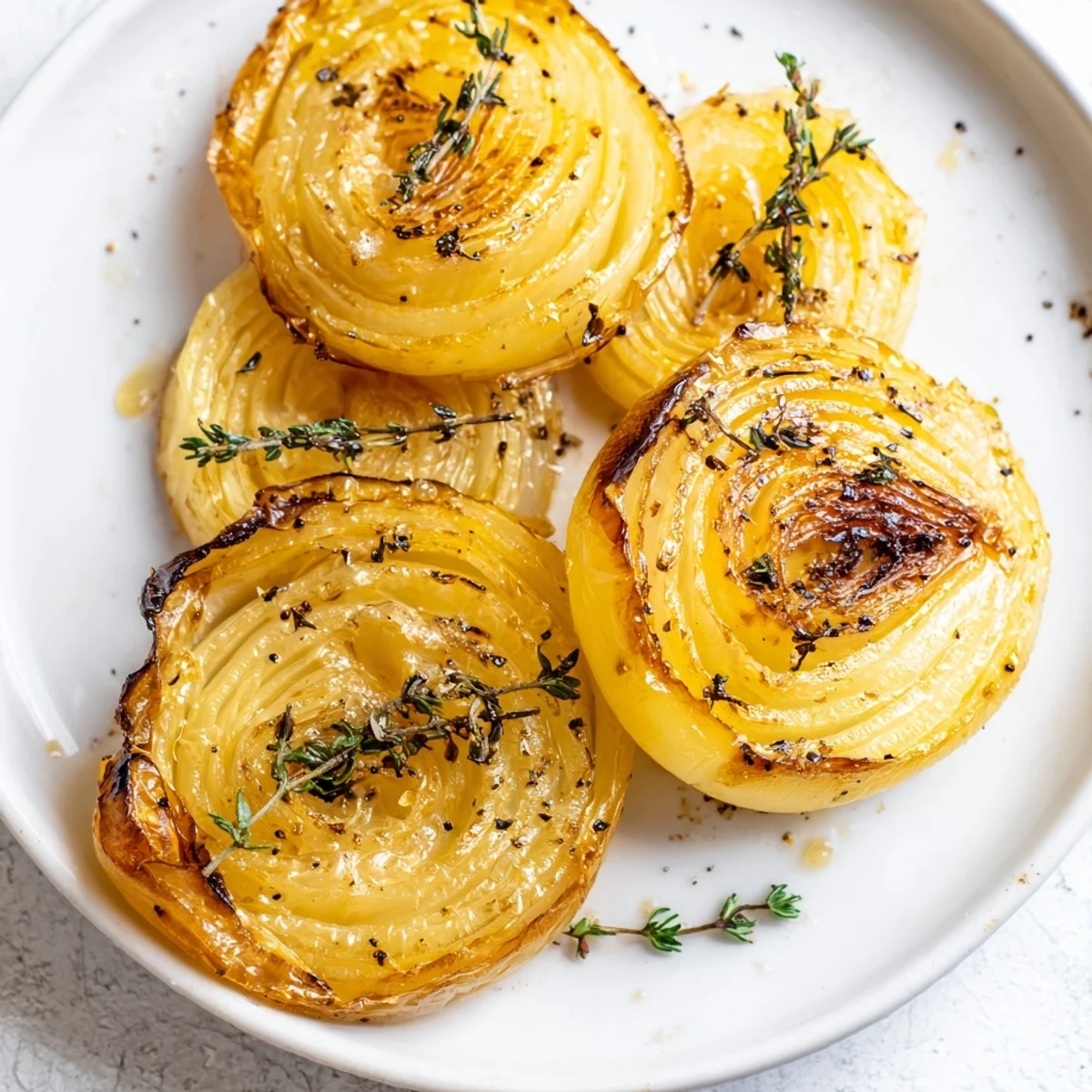
Save This dish features thick yellow onion slices roasted with olive oil, butter, salt, pepper, and fresh thyme, delivering a rich caramelized flavor and tender texture. Roasting at high heat brings out natural sweetness and deep color, complemented optionally by a balsamic vinegar glaze added near the end. Ideal for serving as a savory side or topping, it enriches various dishes with a robust onion essence. The preparation is simple, requiring just careful layering and timed roasting for best results. Variations include omitting butter for a vegan-friendly option.
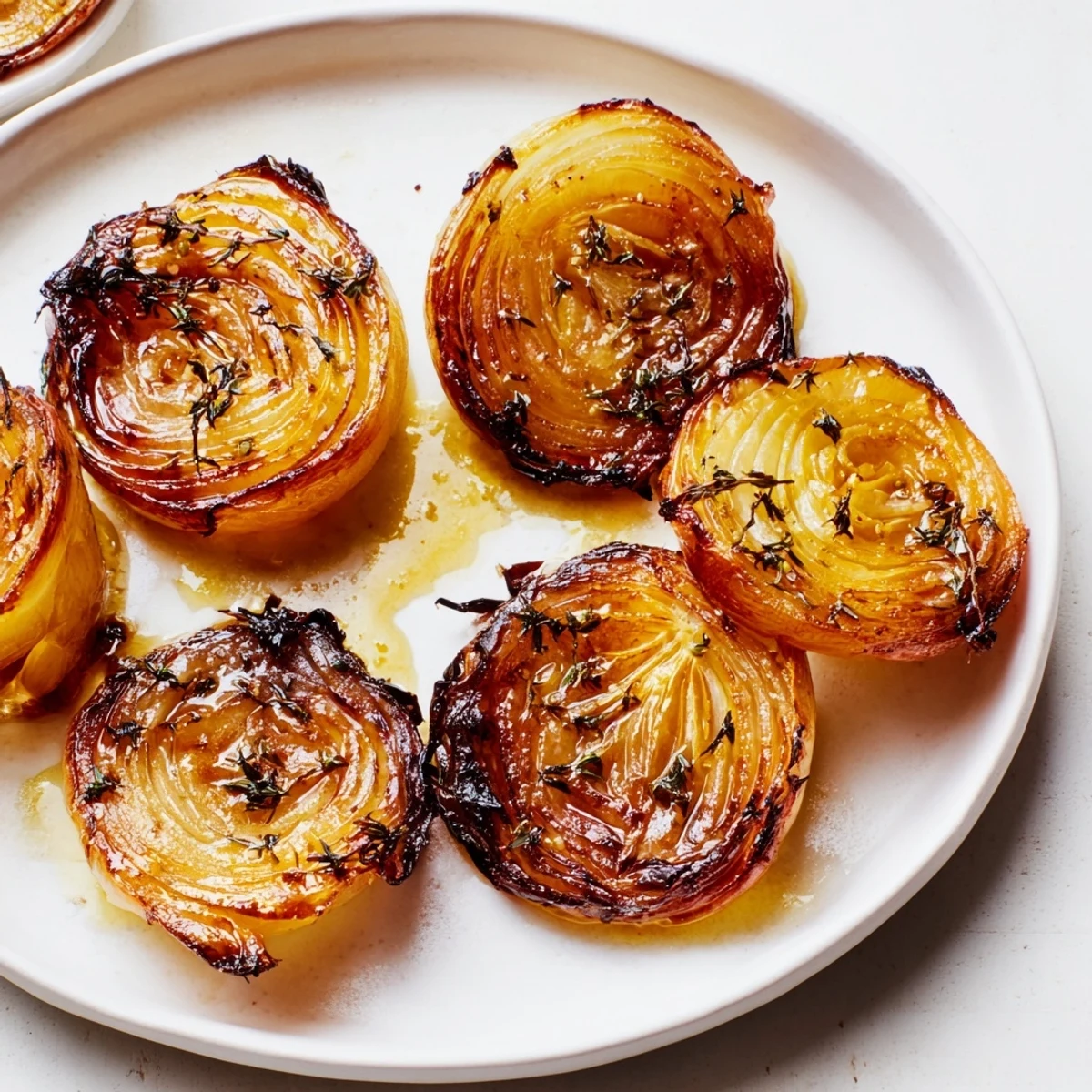
There's something almost meditative about watching onions transform in the oven—those pale, sharp rings slowly turning into glossy, amber sheets that smell like caramelized honey and toasted earth. I discovered this dish by accident one evening when I had more onions than plans, too lazy to spend an hour stirring them on the stovetop, and decided to just roast them instead. What came out was even better than the traditional method: each layer blistered at the edges, sweet and tender, with a depth that made people ask what I'd done to make something so simple taste like comfort.
I made these for a dinner party once and watched my friend eat three forkfuls without saying anything, then just look up and shake her head in that way that means something tastes better than expected. She asked if they were caramelized or if I'd added sugar, and I loved telling her it was just the onions, time, and heat doing what they're meant to do.
Ingredients
- 4 large yellow onions, peeled and sliced into 1/2-inch thick rounds: Yellow onions have the right balance of natural sweetness and structure to caramelize beautifully without falling apart; thicker rounds hold their shape better than thin slices.
- 2 tablespoons olive oil: Use a good quality oil you actually like the taste of, since there's nowhere to hide it here.
- 1 tablespoon unsalted butter: This adds richness and helps the onions turn golden faster, or skip it entirely and use all olive oil if you prefer.
- 1 teaspoon kosher salt: Sea salt works too, just measure by weight if you're being precise, as different salts have different densities.
- 1/2 teaspoon freshly ground black pepper: Fresh ground makes a real difference; pre-ground tastes flat by comparison.
- 1 teaspoon fresh thyme leaves (or 1/2 teaspoon dried thyme): Fresh thyme is milder and more delicate, while dried is more concentrated, so adjust to your taste.
- 1 teaspoon balsamic vinegar, optional: This is the secret finishing touch that adds a subtle sweetness and complexity; save it for the last few minutes.
Instructions
- Heat your oven and prepare:
- Preheat to 400°F and line your baking sheet with parchment paper or a light coating of oil. This keeps the onions from sticking and makes cleanup easy, which matters more than you'd think.
- Arrange and dress the onions:
- Spread the onion slices in a single layer, drizzle evenly with olive oil and butter, then sprinkle with salt, pepper, and thyme. Don't be shy with the seasonings; they distribute as the onions cook down and release their moisture.
- Roast and flip:
- Put them in the oven for 30 to 35 minutes, flipping halfway through so each side gets golden and caramelized. You'll start smelling them around minute 20, and that's when you know they're becoming something special.
- Finish with vinegar if using:
- In the last 5 minutes, drizzle balsamic vinegar over the onions if you're using it. This deepens the flavor and adds a gentle acidity that makes them taste less one-note and more alive.
 Save
Save I remember my grandmother saying that good food doesn't have to be complicated, and these roasted onions felt like proof of that. They sat on the table as a side dish but somehow became the thing everyone went back to, the thing that made the simple meal feel intentional and generous.
Why These Taste Different Than Stovetop Caramelizing
Oven roasting lets the onions caramelize through dry heat and their own sugars, which concentrates flavor differently than butter-heavy stovetop cooking. The edges get crispy and almost charred while the centers stay tender, creating texture variation that feels more interesting. It's also genuinely hands-off once they're in the oven, which means you can finish other parts of your meal without hovering.
How to Use These in Your Kitchen
They're stunning over grilled steak or burgers, scattered across a grain bowl with roasted vegetables, stirred into creamy soups, or even folded into soft cheese on toasted bread. They also keep for several days in the fridge, so you can roast a big batch and use them throughout the week whenever you want to add depth to something ordinary.
Variations and Small Tweaks
These are honestly perfect as written, but small changes open different flavor doors. A pinch of smoked paprika adds a subtle smokiness, chili flakes bring heat, a dash of maple syrup deepens the sweetness, or fresh rosemary instead of thyme shifts the whole mood.
- For a vegan version, skip the butter and let olive oil be your only fat; the results are just as golden.
- Red or white onions will work too, though they taste slightly different and some will separate into individual rings.
- If you're adding balsamic, use it sparingly so it doesn't overpower the delicate caramel flavor.
 Save
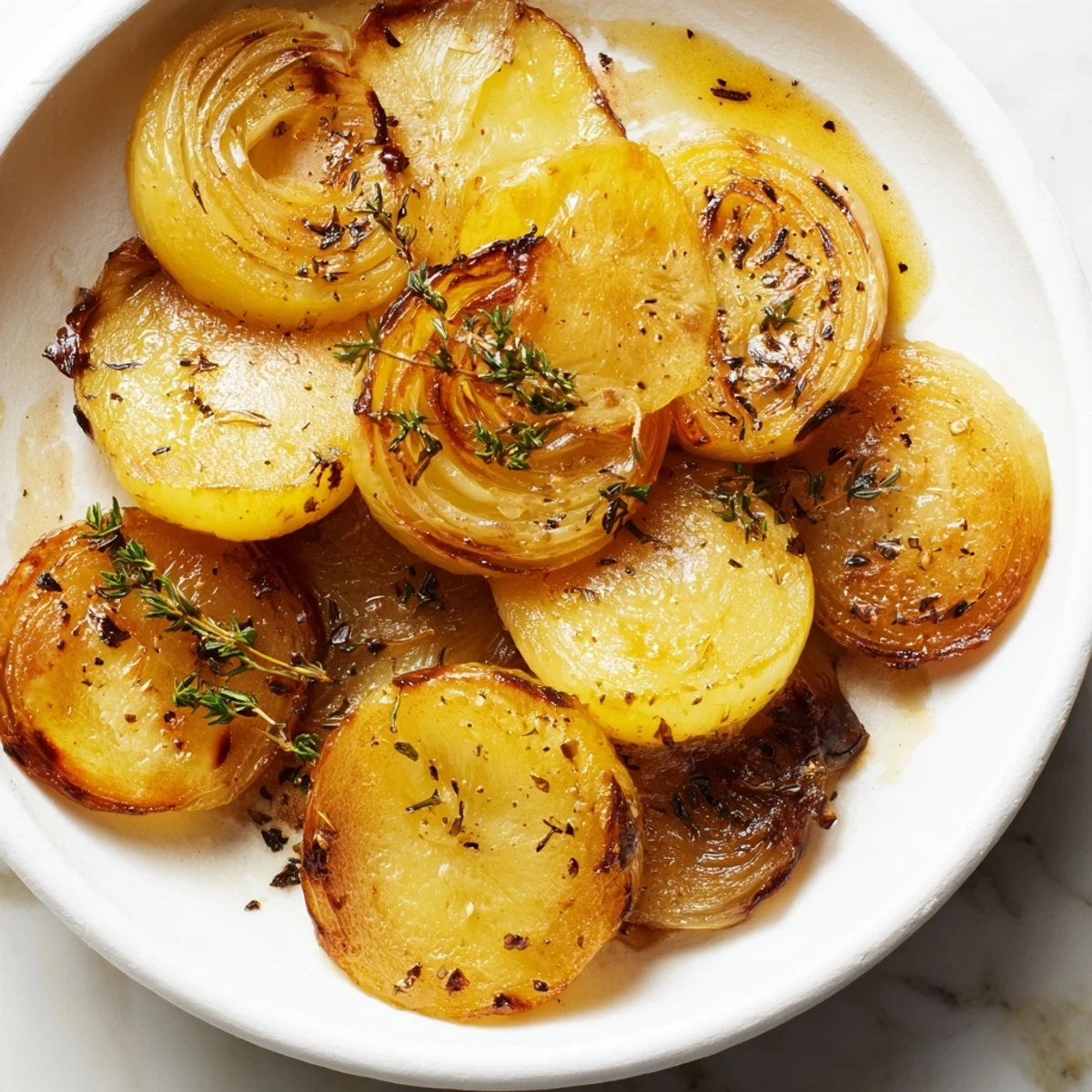
Save Roasted onions remind me that the best dishes are often the simplest, where the ingredients do the talking. Keep this in your regular rotation and you'll find yourself making it far more often than you expected.
Recipe FAQ
- → How do I achieve perfect caramelization on onions?
-
Roast thick onion slices at 400°F, flipping halfway, to develop golden brown edges and deep flavor without burning.
- → Can I make this dish vegan?
-
Yes, simply omit the butter and use only olive oil for roasting to keep it fully plant-based.
- → What does the balsamic vinegar add to the dish?
-
A drizzle in the final minutes adds brightness and a subtle tang that enhances the roasted onions’ natural sweetness.
- → How should the onions be prepared before roasting?
-
Peel and slice into half-inch thick rounds to ensure even cooking and maintain texture during roasting.
- → What are good serving suggestions for these roasted onions?
-
Serve hot as a side dish, a topping for grilled meats or burgers, or mix with cooked grains for extra flavor.