
 Save
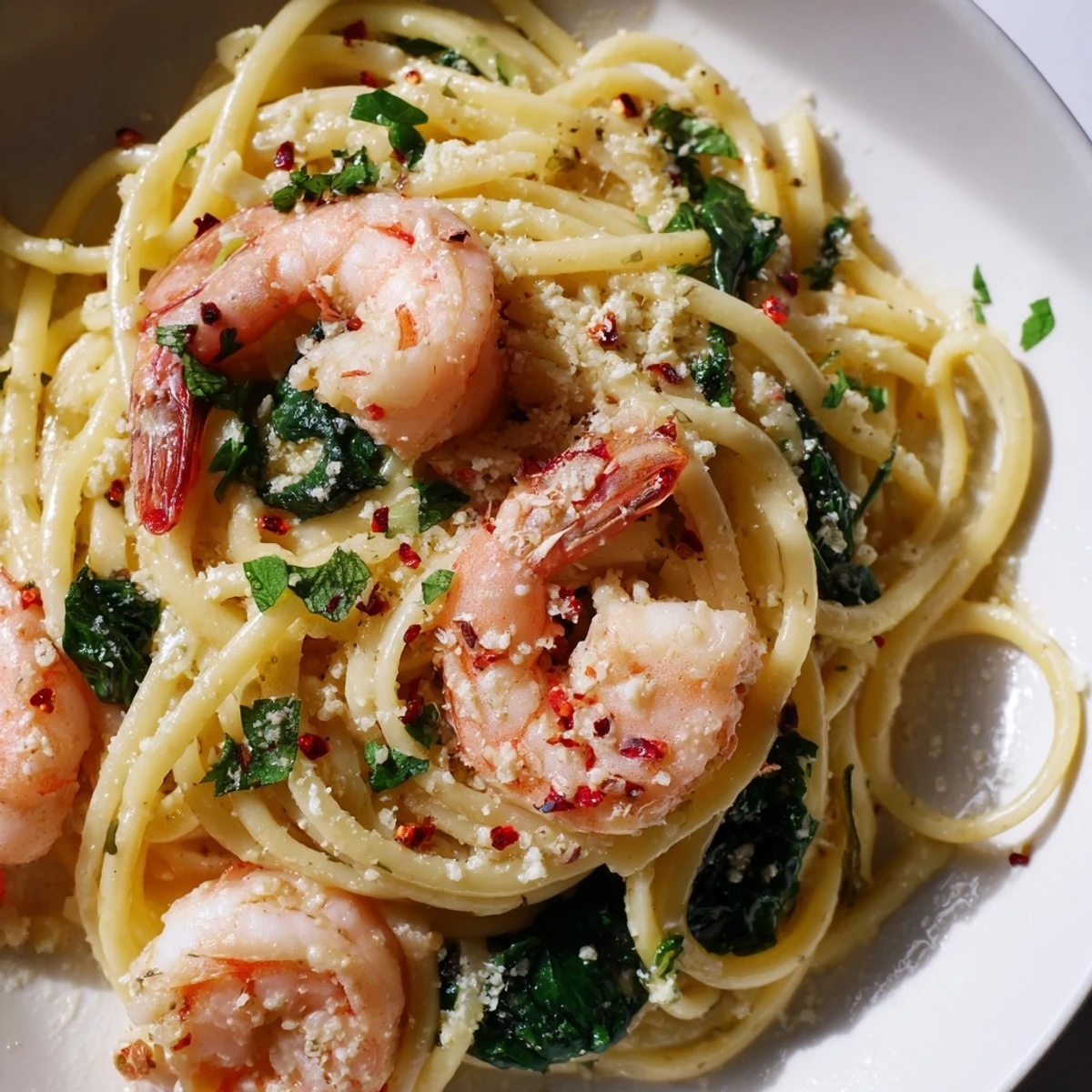
Save Savor juicy shrimp sautéed in a zesty lemon garlic sauce, paired with tender linguine and fresh baby spinach. This light yet satisfying Italian-American dish comes together in just 30 minutes. Simply cook the pasta, sear the seasoned seafood, and toss everything in a bright, buttery white wine sauce for a wholesome dinner that's perfect for busy weeknights.
There's something about the smell of garlic hitting hot olive oil that makes you feel like you're in control of dinner, even on nights when everything else feels chaotic. I discovered this dish on a Tuesday when I had shrimp in the fridge and was tired of the same old routines, so I threw together what I had and was genuinely shocked at how elegant it turned out. The brightness of lemon cut through the richness so perfectly that my skeptical roommate asked for seconds, which never happens. That's when I knew I'd stumbled onto something worth repeating.
I made this for someone I was trying to impress, and what stuck with me wasn't the compliment about the food—it was how we ended up talking for three hours after dinner, the empty plates pushed aside and forgotten. That's when a recipe stops being just instructions and becomes a moment you actually remember.
Ingredients
- Linguine or spaghetti (12 oz): Thin pasta catches the sauce better than thicker shapes, and it cooks in the same time as the shrimp, which keeps your timing simple.
- Large raw shrimp (1 lb): They cook in minutes if you don't crowd the pan, and that's the whole secret to keeping them tender instead of rubbery.
- Olive oil (3 tbsp): Use something you actually like tasting because you'll really taste it here, especially once you add that lemon.
- Garlic (4 cloves): Mince it fine so it disappears into the sauce instead of sitting there in chunks, and add it at just the right moment so it blooms without burning.
- Lemon (1 large): Both the zest and juice matter—the zest is where the brightness lives, and it goes in first while the oil is still quiet.
- Fresh baby spinach (5 oz): It wilts in seconds, so add it near the very end and don't overthink it.
- Dry white wine or chicken broth (1/4 cup): The wine adds a subtle sophistication, but broth works just as well if that's what you have.
- Unsalted butter (2 tbsp): It rounds out the sauce and adds a richness that the lemon brightens right back up.
Instructions
- Get Your Water Going:
- Fill a large pot with water, salt it generously (it should taste like the sea), and bring it to a rolling boil. This is your foundation—don't skip the salt.
- Cook the Pasta:
- Add pasta and stir immediately so it doesn't stick together. Cook until just al dente, then scoop out about half a cup of that starchy water before you drain everything. This water is liquid gold for thinning your sauce later.
- Prep the Shrimp:
- Pat them completely dry with paper towels, then season with salt, pepper, and red pepper flakes if you like a little heat. Dry shrimp will sear instead of steam, which is the difference between delicious and disappointing.
- Sear the Shrimp:
- Get your skillet screaming hot with olive oil, then add the shrimp in a single layer and leave them alone. One to two minutes per side and they're done—they should be barely opaque in the center, still juicy and sweet.
- Build the Sauce:
- In the same pan (all those browned bits are flavor), reduce heat to medium and add your minced garlic and lemon zest. Thirty seconds and your kitchen will smell like a vacation.
- Deglaze and Simmer:
- Pour in the wine or broth and scrape up everything stuck to the bottom of the pan, then add lemon juice. Let it bubble for two minutes so some of the sharp edge softens and the flavors start talking to each other.
- Wilt the Spinach:
- Dump in the baby spinach and stir until it collapses into the sauce, which happens almost instantly. Don't cook it longer or it loses its brightness.
- Bring It All Together:
- Add the cooked pasta, shrimp, and butter back to the pan and toss everything gently. Add pasta water a splash at a time until the sauce coats the noodles without pooling at the bottom—it should be silky, not soupy.
- Finish and Serve:
- Remove from heat, stir in fresh parsley, taste for salt and pepper, then get it to the table while it's still hot. Serve with Parmesan and lemon wedges so people can adjust it to their preference.
 Save
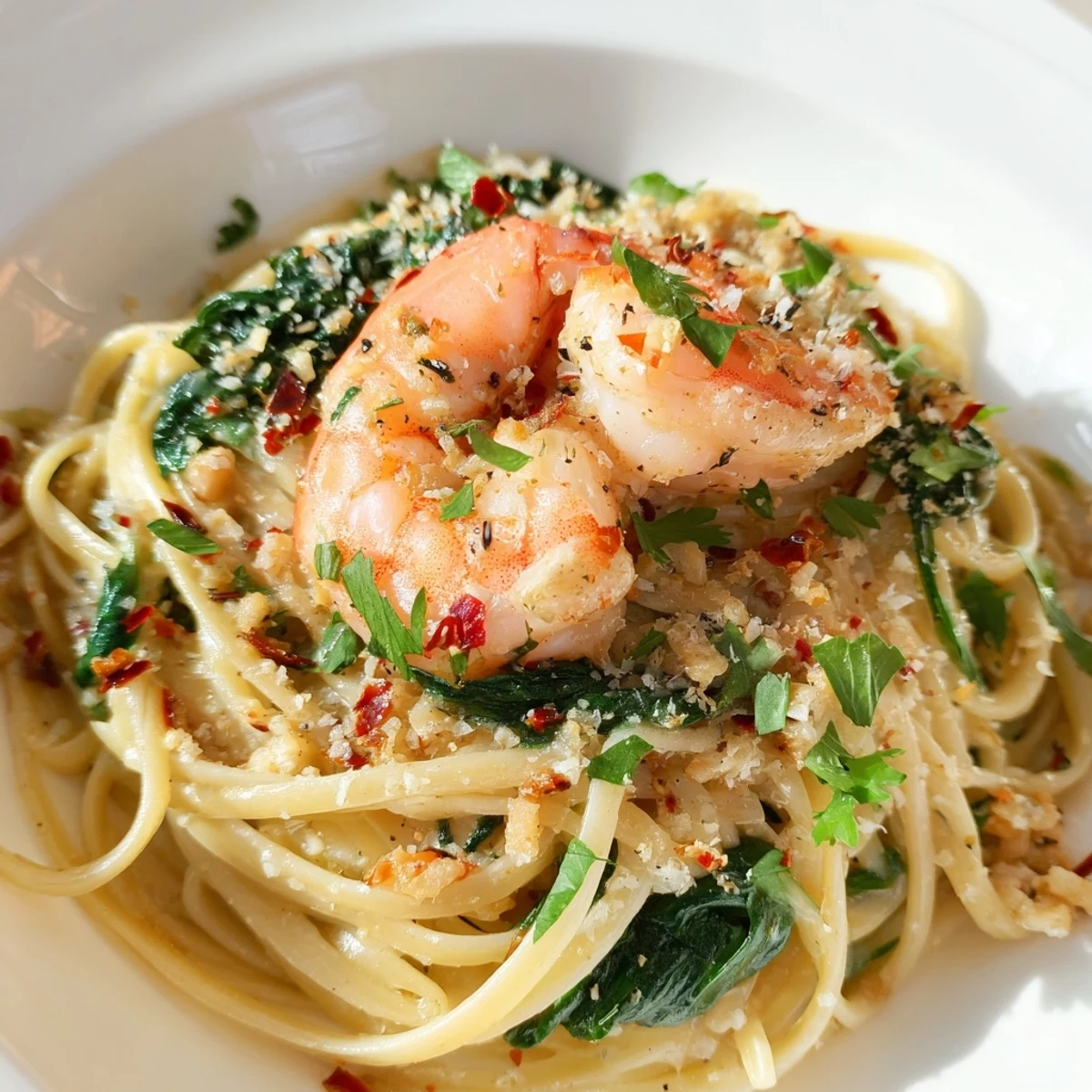
Save I made this once for a friend who had just moved to the city and was feeling lonely, and watching them eat something warm and bright that they didn't have to make themselves—that mattered somehow. Food does that sometimes, it becomes less about the recipe and more about the moment.
Why The Technique Actually Matters Here
The order in which things hit your pan is deliberate, and I learned this the hard way after adding garlic to cold oil once and watching it turn bitter and dark. When oil is hot and the garlic goes in for just 30 seconds, it releases all its fragrance without losing its sweet edge, and that subtle difference is what makes this taste bright instead of burnt. The lemon zest goes in at the same moment because the warmth helps release its oils, giving you flavor that tastes fresh rather than sour. Timing isn't arbitrary here—it's the invisible thing that separates a good dish from one that tastes like you weren't paying attention.
Making It Your Own
Some people add a pinch of crushed red pepper with the garlic if they want heat, and that works beautifully, but I've also seen people throw in a handful of cherry tomatoes at the end for sweetness and color, or swap the spinach for arugula if they want something peppery instead of mild. The foundation is solid enough that it welcomes small changes, which is the mark of a good recipe—it's flexible but never floppy.
Serving Suggestions & Last Thoughts
Serve this family style if you can, letting people add their own Parmesan and lemon wedges so they're not guessing what they want. A simple green salad on the side is nice for balance, and a crisp white wine that tastes like the one you cooked with feels intentional and right.
- If you're making this for guests, prep your garlic and lemon zest ahead of time so you're not scrambling when people arrive.
- The whole dish comes together in 30 minutes from cold pan to plated, so it's perfect for nights when you want something that feels special without the stress.
- Leftover pasta can be gently reheated with a splash of water or broth, though honestly it's better eaten the same day while the spinach still feels fresh.
 Save
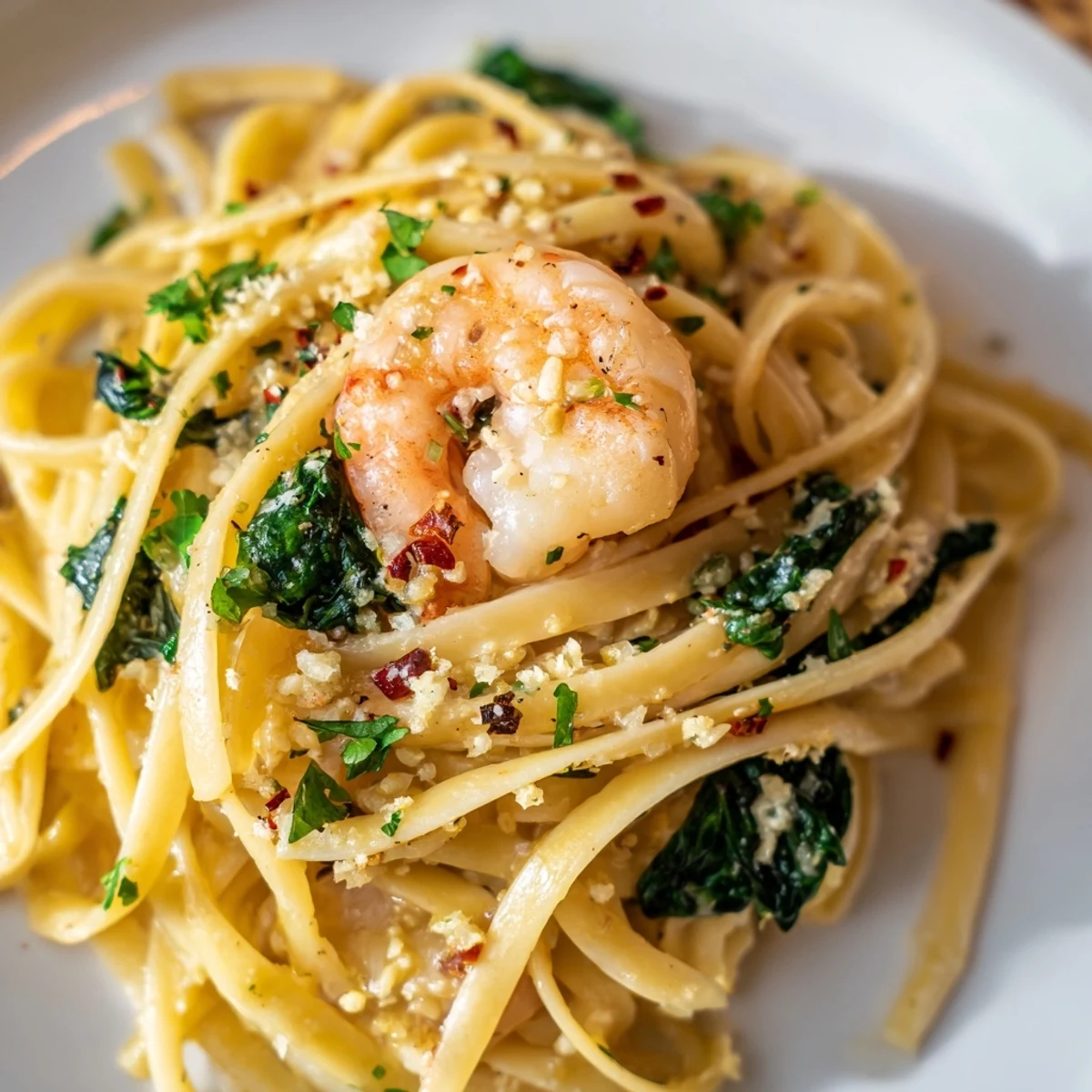
Save This dish has become my go-to when I want to feel like I'm cooking something worth the effort without spending the whole evening in the kitchen. There's something deeply satisfying about that.
Recipe FAQ
- → Can I use frozen shrimp?
-
Yes, just ensure they are completely thawed and patted dry before cooking to prevent them from becoming watery.
- → What can I substitute for white wine?
-
Chicken broth is an excellent alternative that provides depth of flavor without the alcohol.
- → How can I make this dish dairy-free?
-
Simply omit the Parmesan cheese and replace the butter with additional olive oil.
- → Is it possible to add extra vegetables?
-
Absolutely, cherry tomatoes or asparagus pair wonderfully with the lemon and garlic flavors.
- → How do I store leftovers?
-
Store in an airtight container in the refrigerator for up to two days.