
 Save
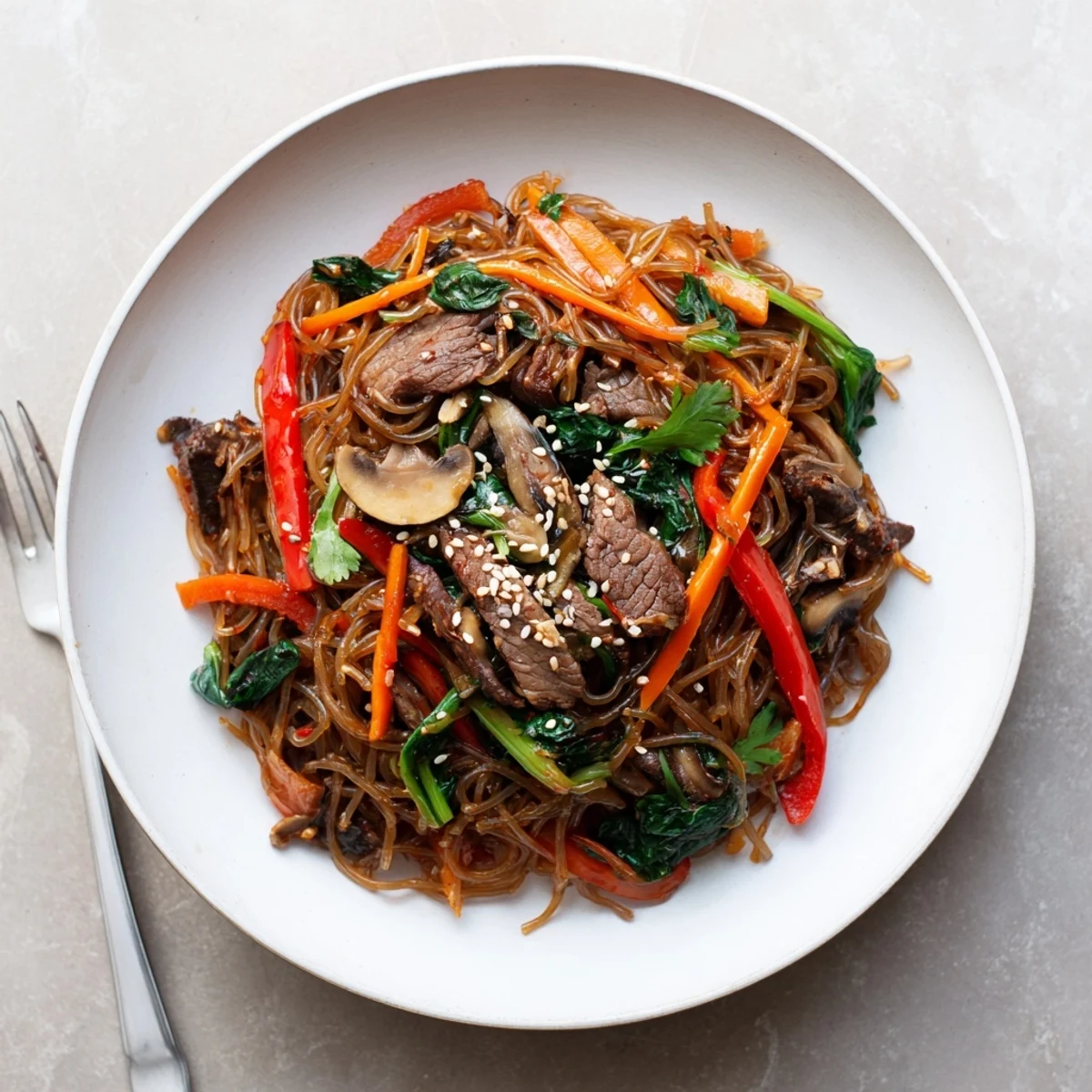
Save This satisfying dish brings together thinly sliced beef sirloin, sweet potato noodles, and colorful vegetables in a rich, umami-packed sauce. The marinade infuses the beef with deep flavor while quick stir-frying keeps everything tender and vibrant.
The sauce balances salty soy sauce with sweet brown sugar and the gentle warmth of gochujang Korean chili paste. Toasted sesame oil adds nutty depth, while rice vinegar provides brightness to cut through the richness.
Cooking comes together in under an hour—marinate the beef, boil the noodles, stir-fry the vegetables until just tender, then combine everything with the aromatic sauce. Garnish with sesame seeds and fresh herbs for a complete meal that serves four.
The first time I made these noodles, my tiny apartment smelled like a Seoul street corner at midnight—earthy, spicy, and impossibly inviting. I'd been craving something that felt like comfort food but could still handle a weeknight dinner deadline when I remembered watching a Korean cooking show where the chef made stir-fried noodles look effortless.
Last winter, my roommate came home during a snowstorm exactly as I was tossing these noodles with the final sprinkle of sesame seeds. She stood in the doorway with her wet coat still on, inhaling deeply, and immediately asked if there was enough for two.
Ingredients
- Beef sirloin or ribeye: Thinly slicing against the grain makes every bite tender, and the brief marination infuses flavor without toughening the meat
- Korean sweet potato noodles: These chewy, slightly translucent noodles hold up beautifully in stir-fry and have a satisfying bounce that wheat noodles cannot match
- Gochujang: This fermented Korean chili paste brings depth, umami, and gentle heat that builds rather than overwhelms
- Carrots and bell pepper: Julienned vegetables cook quickly while staying crisp, adding fresh texture and vibrant color against the dark sauce
- Sesame oil: Toasted sesame oil in the sauce and for finishing gives that unmistakable Korean restaurant aroma
Instructions
- Marinate the beef:
- Combine the sliced beef with soy sauce, sesame oil, sugar, and garlic, letting it sit while you prep everything else
- Cook the noodles:
- Boil the noodles until just tender, then rinse under cold water to stop cooking and prevent sticking
- Whisk the sauce:
- Stir together soy sauce, brown sugar, gochujang, vinegar, sesame oil, water, and ginger until the sugar dissolves completely
- Stir-fry the vegetables:
- Sauté the carrots, peppers, and mushrooms until just tender, then add spinach and green onions until they wilt
- Cook the beef:
- Stir-fry the marinated beef over high heat until browned and fragrant
- Combine everything:
- Add the vegetables, noodles, and sauce to the wok, tossing until everything is glossy and evenly coated
- Garnish and serve:
- Finish with sesame seeds and fresh herbs while the noodles are still steaming hot
 Save
Save This dish became my go-to for birthdays and small celebrations, somehow feeling special enough for guests while remaining simple enough to make without stress.
Getting the Noodle Texture Right
Sweet potato noodles have a unique bounce that can be tricky—cook them just until they lose their raw opacity but still offer slight resistance when you bite. Rinse them thoroughly under cold water, which not only stops cooking but also removes surface starch that would otherwise make the finished dish gummy.
Building the Perfect Sauce
Taste your sauce before adding it to the wok, adjusting the gochujang if you prefer more heat or the brown sugar if it needs extra sweetness. The sauce should be balanced on its own since it will coat everything in the dish.
Making It Your Own
Substitute firm tofu or seitan for a vegetarian version that still delivers plenty of protein and texture. Add vegetables like zucchini, broccoli, or snap peas depending on what is in season.
- Double the sauce recipe if you love noodles that swim in extra flavor
- Toast your sesame seeds in a dry pan for deeper nutty aroma
- Prepare all ingredients before heating the wok, since stir-frying moves fast
 Save
Save These noodles have become the dish I make when I want something that feels like a hug but still looks impressive on the table. Hope they find their way into your regular rotation too.
Recipe FAQ
- → What type of noodles work best?
-
Korean sweet potato noodles (dangmyeon) are traditional and provide the perfect chewy texture. Dried udon noodles make an excellent substitute with similar thickness and texture.
- → Can I make this dish spicier?
-
Increase the gochujang to 1.5 tablespoons or add Korean chili flakes (gochugaru) for extra heat. Adjust gradually to find your preferred spice level.
- → What cut of beef should I use?
-
Beef sirloin or ribeye works beautifully—both are tender and absorb the marinade well. Slice the beef thinly against the grain for the most tender results.
- → Can I prepare this ahead of time?
-
Marinate the beef up to 4 hours in advance for deeper flavor. The sauce can be whisked together and stored in the refrigerator for 2-3 days before cooking.
- → How do I store leftovers?
-
Store in an airtight container in the refrigerator for up to 3 days. Reheat gently in a skillet with a splash of water to refresh the sauce and prevent the noodles from drying out.
- → Is this gluten-free?
-
The traditional version contains gluten. Use tamari instead of soy sauce, choose gluten-free noodles, and verify your gochujang is certified gluten-free to make it suitable.