
 Save
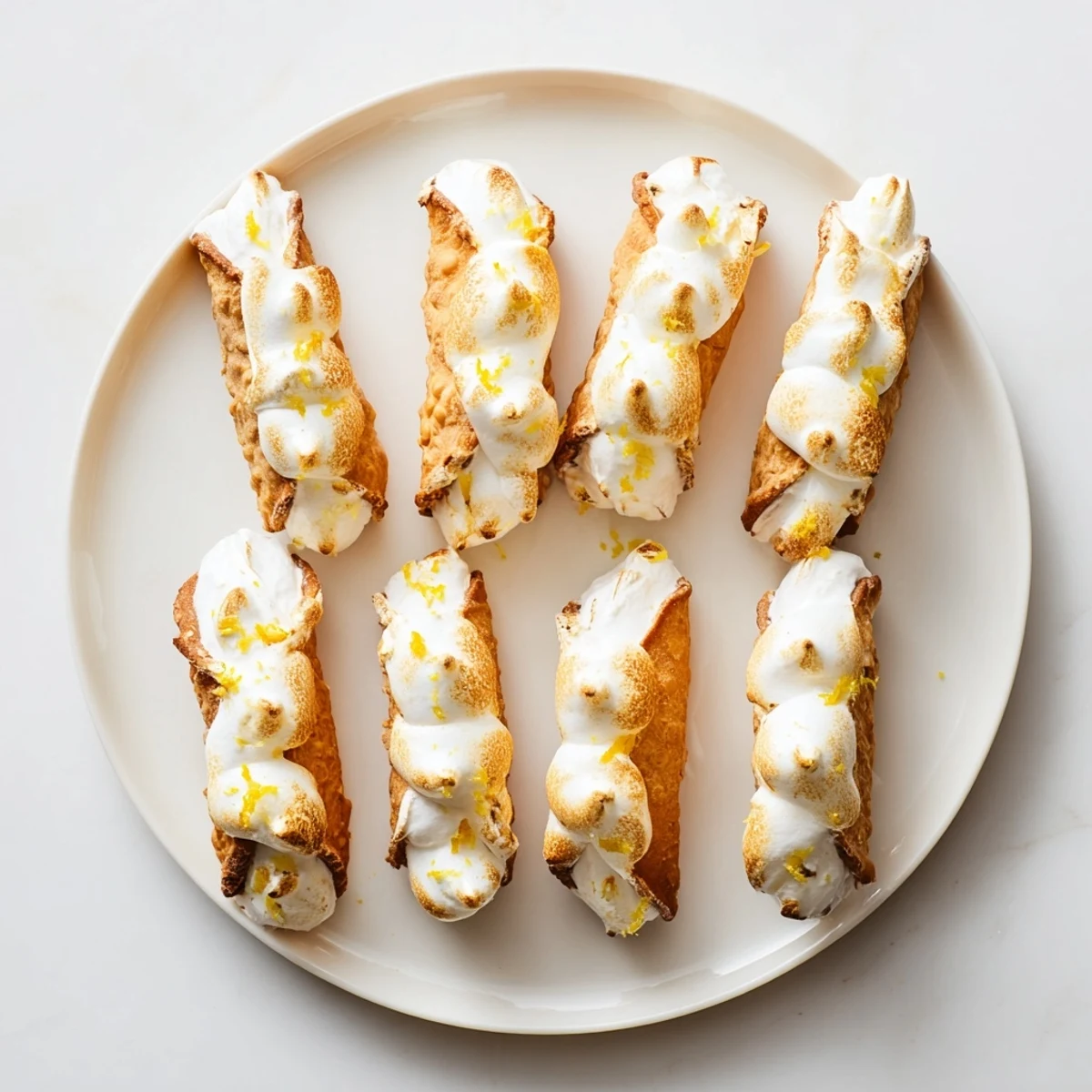
Save These crispy cannoli shells feature a vibrant lemon ricotta filling that balances sweet and tangy flavors perfectly. The whipped cream adds lightness while the fresh lemon zest and juice bring bright citrus notes. Topped with handcrafted meringue that gets quickly toasted until golden and slightly crisp, each bite offers layers of texture—from the crunchy shell to the smooth cream and airy meringue. Best assembled just before serving to maintain the shell's signature crunch.
The first time I brought these to a dinner party, my friend Marco took one bite and actually stopped the conversation. He said it reminded him of the lemon gelato his nonna used to buy him in Sicily, except better because it was crispy and creamy all at once. Now I get text messages every spring asking when I'm making my lemon meringue cannoli again.
Last summer I made these for my daughter's graduation party and watched them disappear in minutes. My sister-in-law, who claims to hate ricotta, ate three and asked for the recipe before she even left. Something about that lemon brightness with the pillowy meringue makes people forget they're supposed to be saving room for dinner.
Ingredients
- 8 store-bought cannoli shells: Keep them in their sealed container until the very last minute because humidity makes them lose their magical crunch
- 1 cup (240 g) drained ricotta cheese: The draining step is non-negotiable—give it at least 30 minutes in a sieve or your filling will be watery and sad
- 1/2 cup (120 ml) heavy cream: Whip this to stiff peaks and it transforms the ricotta into something impossibly light
- 1/4 cup (50 g) granulated sugar: Split between the filling and meringue, it balances the tart lemon without making it cloying
- 1 tablespoon finely grated lemon zest: Use a microplane and only grate the yellow part—the white pith is bitter and will ruin everything
- 3 tablespoons fresh lemon juice: Fresh matters enormously here, and Meyer lemons make it even more special
- 1/2 teaspoon vanilla extract: Pure extract only, never imitation—your nose will know the difference
- Pinch of salt: Seems strange in dessert, but it makes the lemon flavor pop forward
- 2 large egg whites: Room temperature whips up faster and higher than cold whites
- 1/4 teaspoon cream of tartar: The secret weapon that stabilizes your meringue so it holds its shape
Instructions
- Whisk the ricotta base:
- Combine the drained ricotta, half the sugar, lemon zest, lemon juice, vanilla, and salt in a mixing bowl. Beat until absolutely smooth and no lumps remain—about 2 minutes with an electric mixer on medium speed.
- Whip the heavy cream:
- In a separate bowl, whip the cream until stiff peaks form. Lift the beater straight up and the cream should hold its shape without collapsing at all.
- Combine the fillings:
- Gently fold the whipped cream into the ricotta mixture using a silicone spatula. Use big sweeping motions and stop as soon as no white streaks remain—over-folding knocks out the air you just worked so hard to incorporate.
- Fill the shells:
- Scoop the lemon cream into a piping bag fitted with a large star tip. Pipe into both ends of each cannoli shell until the filling just reaches the edges but doesn't overflow.
- Make the meringue:
- Beat the egg whites and cream of tartar with an electric mixer until soft peaks form—when you lift the beater, the peaks should droop over slightly. Gradually add the remaining sugar while beating, then continue until stiff, glossy peaks form that stand straight up. Beat in the vanilla.
- Top the cannoli:
- Spoon or pipe the meringue onto the filled ends of each cannoli, making little swirled peaks. Don't worry about making them perfect—those toasted peaks will look gorgeous.
- Toast and serve:
- Use a kitchen torch to lightly toast the meringue until golden brown spots appear, moving the torch constantly so nothing burns. No torch? Broil for 1-2 minutes but don't walk away—meringue goes from golden to black in seconds.
 Save
Save These became my go-to dessert for Easter one year when I was tired of the usual carrot cake and wanted something that felt fresh and springlike. Now they're requested for every special occasion, and I've actually started hiding them in the laundry room when guests arrive so they don't disappear before dinner is served.
Make Ahead Magic
You can prepare both the lemon cream filling and the meringue up to 24 hours ahead. Store the cream in an airtight container in the refrigerator and keep the meringue at room temperature covered loosely with plastic wrap. The morning of your event, just pipe the cream into shells, top with meringue, and torch them right before serving.
Torch Versus Broiler
A kitchen torch gives you that professional restaurant look with control and precision, but I learned that a broiler actually creates a deeper, more complex flavor. The high heat caramelizes the sugars differently, creating hints of toasted marshmallow that you just can't get with a torch. If using the broiler, rotate the pan halfway through for even browning.
Flavor Variations To Try
Once you master the classic lemon version, the whole world of cannoli opens up. I've made orange cream with chocolate shavings for winter holidays, and coffee cream with a dusting of cocoa for after-dinner treats. The technique stays exactly the same—just swap the citrus juice and zest for your chosen flavor.
- For chocolate lovers, fold melted and cooled dark chocolate into the ricotta cream before adding the whipped cream
- Try almond extract instead of vanilla in the meringue and dip the ends in chopped toasted almonds
- In summer, fold in fresh berries right before piping—they create beautiful purple and pink swirls throughout the cream
 Save
Save There's something deeply satisfying about the contrast of textures in these cannoli—the snap of the shell, the silkiness of the cream, the pillowy sweetness of meringue. They're the kind of dessert that makes people pause mid-conversation and close their eyes for just a moment.
Recipe FAQ
- → Can I make the lemon filling ahead of time?
-
Yes, prepare the lemon cream filling up to 2 days in advance and store it in an airtight container in the refrigerator. The meringue is best made fresh, but you can whip it just before assembling and serving.
- → What if I don't have a kitchen torch?
-
Place the filled cannoli on a baking sheet and broil for 1–2 minutes, watching closely to prevent burning. The meringue will toast beautifully under the broiler—just keep a close eye on it.
- → Can I use homemade cannoli shells?
-
Absolutely! Homemade shells add extra authenticity. Just ensure they're completely cooled before filling. If making ahead, store shells in an airtight container to maintain crispness.
- → How do I prevent the shells from getting soggy?
-
Fill cannoli just before serving. The moisture from the cream can soften shells over time. If you need to prepare in advance, store filling and shells separately, then assemble within 30 minutes of serving.
- → Can I substitute the ricotta cheese?
-
Mascarpone works well for a richer, creamier texture. For a lighter version, use part-skim ricotta or blend cottage cheese until smooth. The flavor and consistency will vary slightly.
- → Why add cream of tartar to the meringue?
-
Cream of tartar stabilizes the egg whites, helping them hold their shape and creating glossy, stiff peaks that won't deflate. It also ensures the meringue toasts evenly under heat.