
 Save
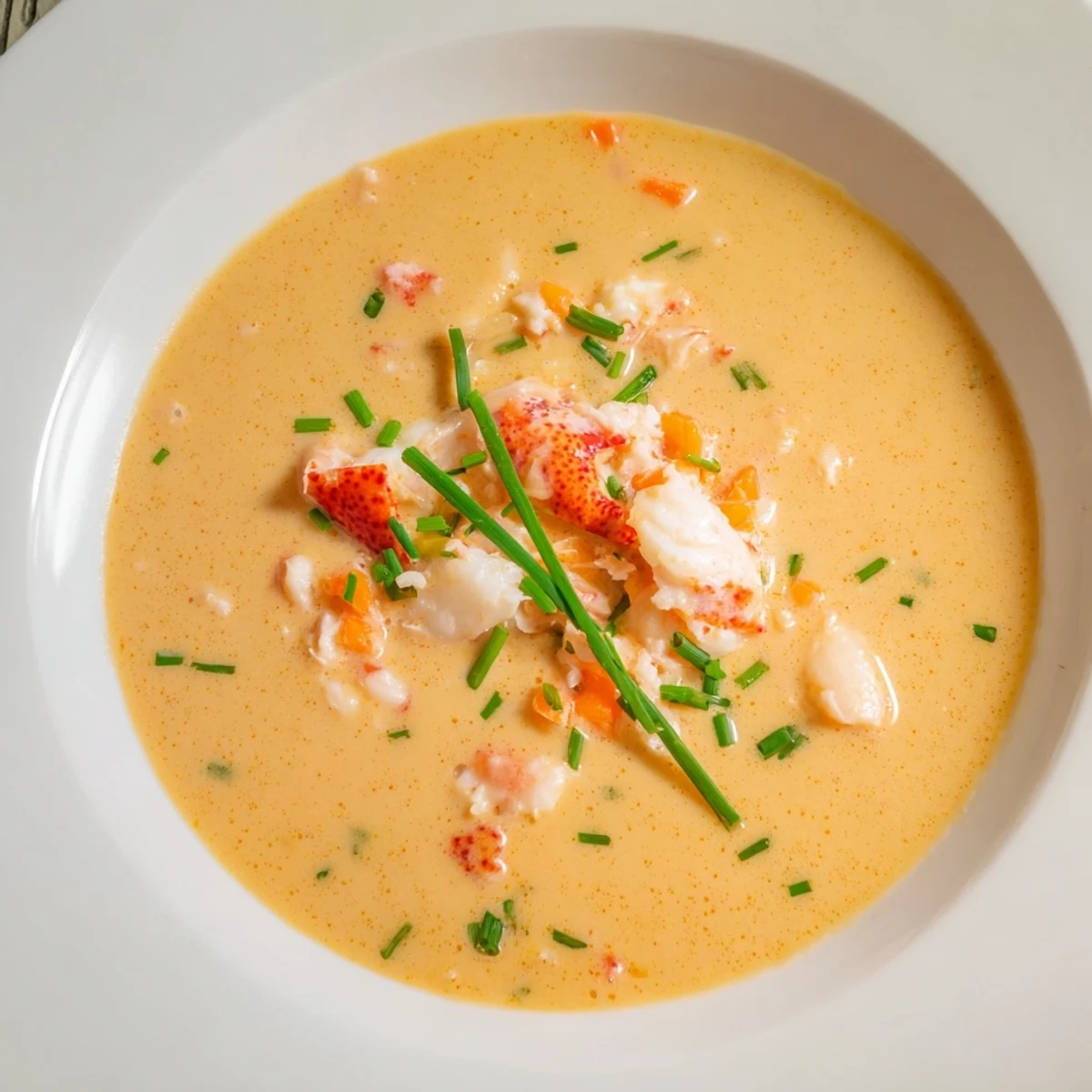
Save This dish offers a rich, velvety blend of tender lobster meat combined with aromatic vegetables sautéed in butter and olive oil. The soup base is enhanced by cooking lobster shells with herbs and tomato paste before adding white wine and a tangy apple cider vinegar, which stands in for sherry vinegar. Finished with cream and milk for smoothness, it’s seasoned carefully for depth and garnished with fresh chives or parsley, creating a flavorful and elegant starter ideal for special occasions.
The steam still clouds my glasses every time I make this. I first attempted lobster bisque on a snowy February evening, convinced I needed something wildly impressive to combat the winter doldrums. Now it has become our anniversary tradition, regardless of the season.
Last year I made this for my in laws' anniversary dinner. My father in law actually went silent after his first spoonful, then looked at me and asked if I had been holding out on him all these years. The plates were completely clean, someone actually asked for more bread to sop up the last drops.
Ingredients
- 2 live lobsters (1¼ lb each) or 400 g cooked lobster meat: Live lobsters give you those precious shells for the base, but cooked meat works perfectly if you want to skip the boiling step
- 2 tbsp unsalted butter and 1 tbsp olive oil: This combination prevents the butter from burning while still giving you that rich mouthfeel
- 1 medium onion, 1 medium carrot, 1 celery stalk: The classic mirepoix foundation, diced small so they disappear into the velvety finished soup
- 2 garlic cloves, minced: Add these after the vegetables soften so they do not turn bitter
- 2 tbsp tomato paste: This deepens the color and adds that subtle sweetness that balances the seafood
- 1 bay leaf and 1 tsp fresh thyme leaves: These herbs perfume the entire base, remove the bay leaf before blending
- 1 tsp sweet paprika: Smoked paprika works too, but sweet lets the lobster shine without competing flavors
- 100 ml dry white wine: Something you would actually drink, nothing overly oaky or sweet
- 1 tbsp apple cider vinegar: The sherry substitute that adds just enough acid to cut through all that cream
- 750 ml seafood stock and 250 ml each heavy cream and whole milk: The cream milk combo gives luxury without being overwhelmingly heavy
- Salt, freshly ground black pepper, pinch of cayenne: The cayenne is optional but adds a lovely warmth at the finish
- 2 tbsp chopped fresh chives or parsley: Fresh herbs make the bowls look professionally finished
Instructions
- Prepare the lobster:
- Bring a large pot of salted water to boil and cook the lobsters for 8 to 10 minutes until they turn bright red. Let them cool enough to handle, then pull all the meat from the tails, claws, and knuckles. Save those shells, chop the meat into bite sized pieces.
- Build your flavor base:
- Heat the butter and olive oil in your large pot over medium heat. Add the onion, carrot, and celery, sautéing for 6 to 8 minutes until they soften. Take your time here, do not let them brown.
- Add the aromatics:
- Stir in the garlic and tomato paste, cooking for just 1 minute until fragrant. Toss in the reserved lobster shells, bay leaf, thyme, and paprika. Let everything cook together for 2 to 3 minutes, stirring constantly.
- Deglaze the pot:
- Pour in the white wine and apple cider vinegar. Let it bubble for 2 minutes while you scrape up any browned bits from the bottom. Those bits are pure flavor.
- Simmer the stock:
- Add the seafood stock and bring everything to a boil. Reduce the heat and let it simmer uncovered for 25 minutes while the shells work their magic.
- Blend it smooth:
- Fish out and discard the shells and bay leaf. Use an immersion blender to purée until completely silky, or work in batches if using a countertop blender.
- Add the cream and lobster:
- Stir in the heavy cream and milk, then add most of the chopped lobster meat. Simmer gently for just 5 minutes, then season with salt, pepper, and cayenne.
- Serve immediately:
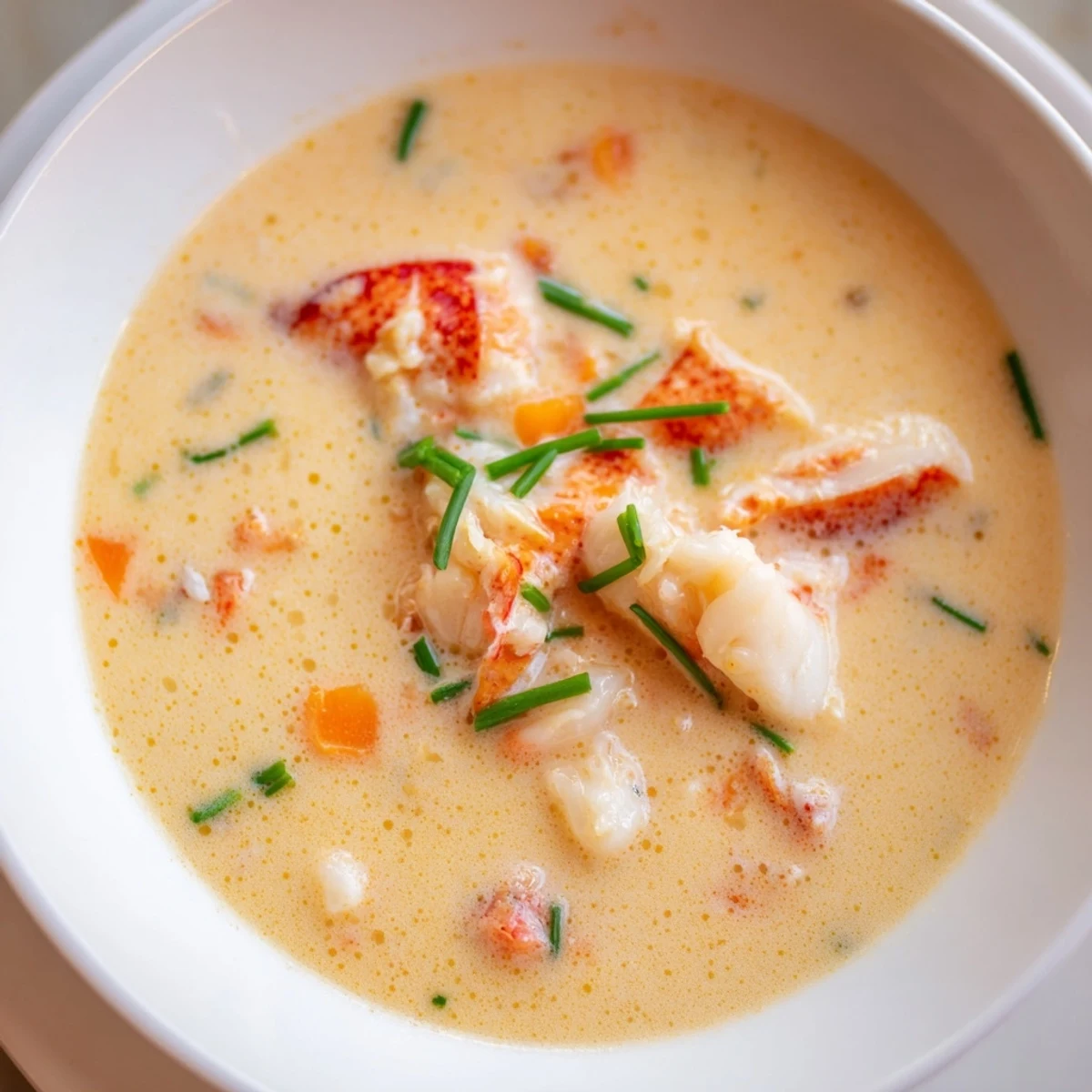
- Ladle into warmed bowls and top with those reserved lobster pieces and fresh herbs. Watch everyone suddenly become very quiet.
 Save
Save This soup has become my go to when I need to make someone feel truly special. There is something about the process, the careful stirring, the way the kitchen fills with this impossible aroma, that feels like an act of love.
Making It Ahead
You can prepare the base through the blending step up to two days in advance. Store it in the refrigerator and reheat gently before stirring in the cream and lobster. This actually improves the flavor.
The Perfect Pairing
A chilled Chardonnay with good acidity cuts through the richness beautifully. Sparkling wine works too, something dry and crisp. Crusty bread is non negotiable.
Troubleshooting Your Bisque
If the texture feels too thin, let it simmer a bit longer before adding cream. Too thick, splash in more stock. Trust your instincts.
- Use a low sodium stock if you are sensitive to salt
- Immersion blenders work better than countertop for this recipe
- Always warm your bowls before serving
 Save
Save Good soup makes people remember they are loved. Hope this one finds its way to your table soon.
Recipe FAQ
- → What can be used instead of sherry vinegar?
-
Apple cider vinegar works well as a substitute, offering a similar tangy acidity. Red wine vinegar can also be used in a pinch.
- → How do you extract maximum lobster flavor?
-
Simmering the lobster shells with herbs and tomato paste in stock helps extract deep seafood flavors that enrich the soup base.
- → Can I use cooked lobster meat instead of live lobsters?
-
Yes, cooked lobster meat may be used directly, but simmering the shells separately is recommended to enhance the broth’s flavor.
- → What thickens the bisque to its creamy texture?
-
The combination of heavy cream, whole milk, and pureeing the base creates the signature smooth and creamy consistency.
- → What are ideal garnishes for this lobster dish?
-
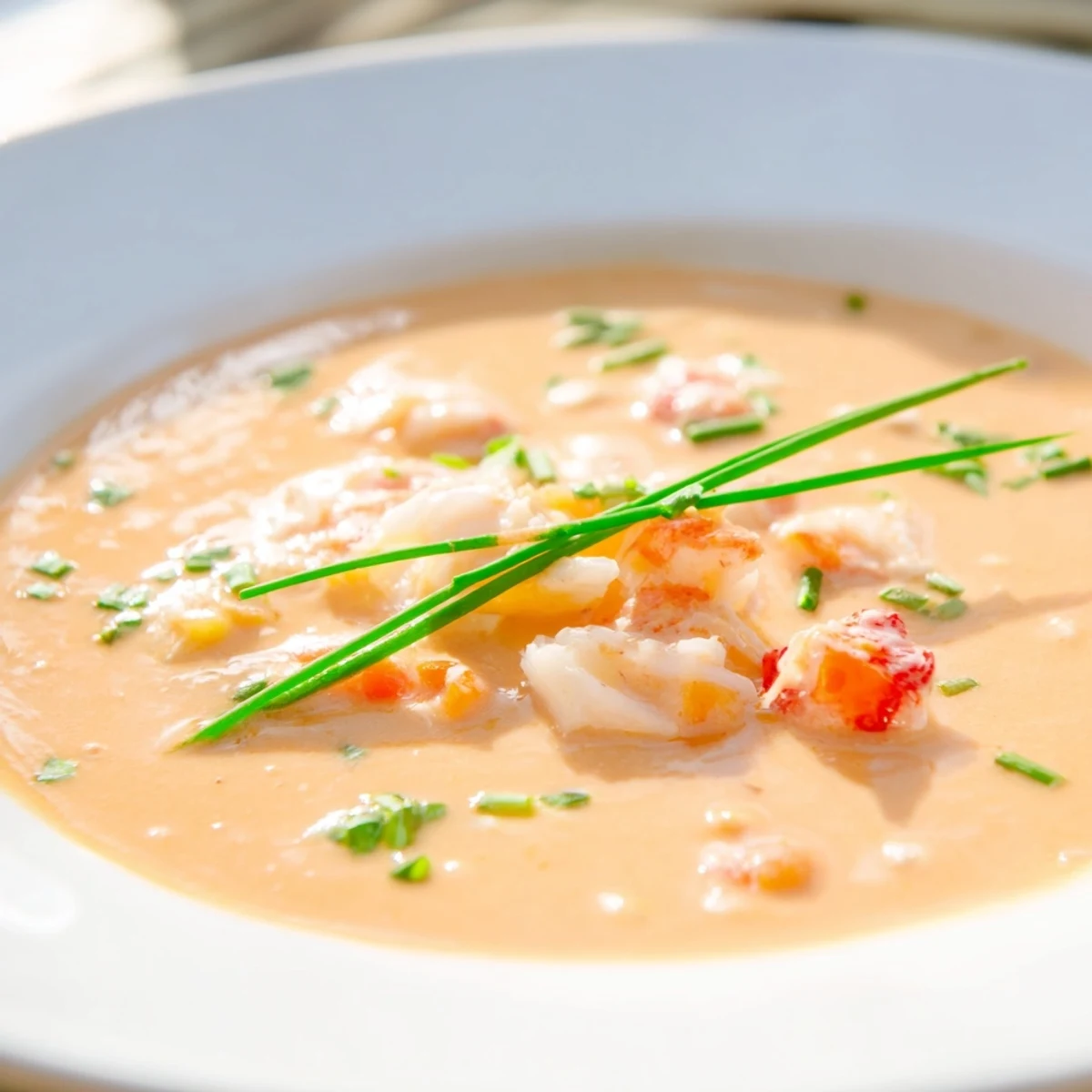
Fresh chopped chives or parsley add a bright contrast and fresh aroma to the finished bowl.
- → Is there a way to deepen the flavor of the broth?
-
Roasting the lobster shells before simmering intensifies the broth’s richness and adds subtle caramelized notes.