
 Save
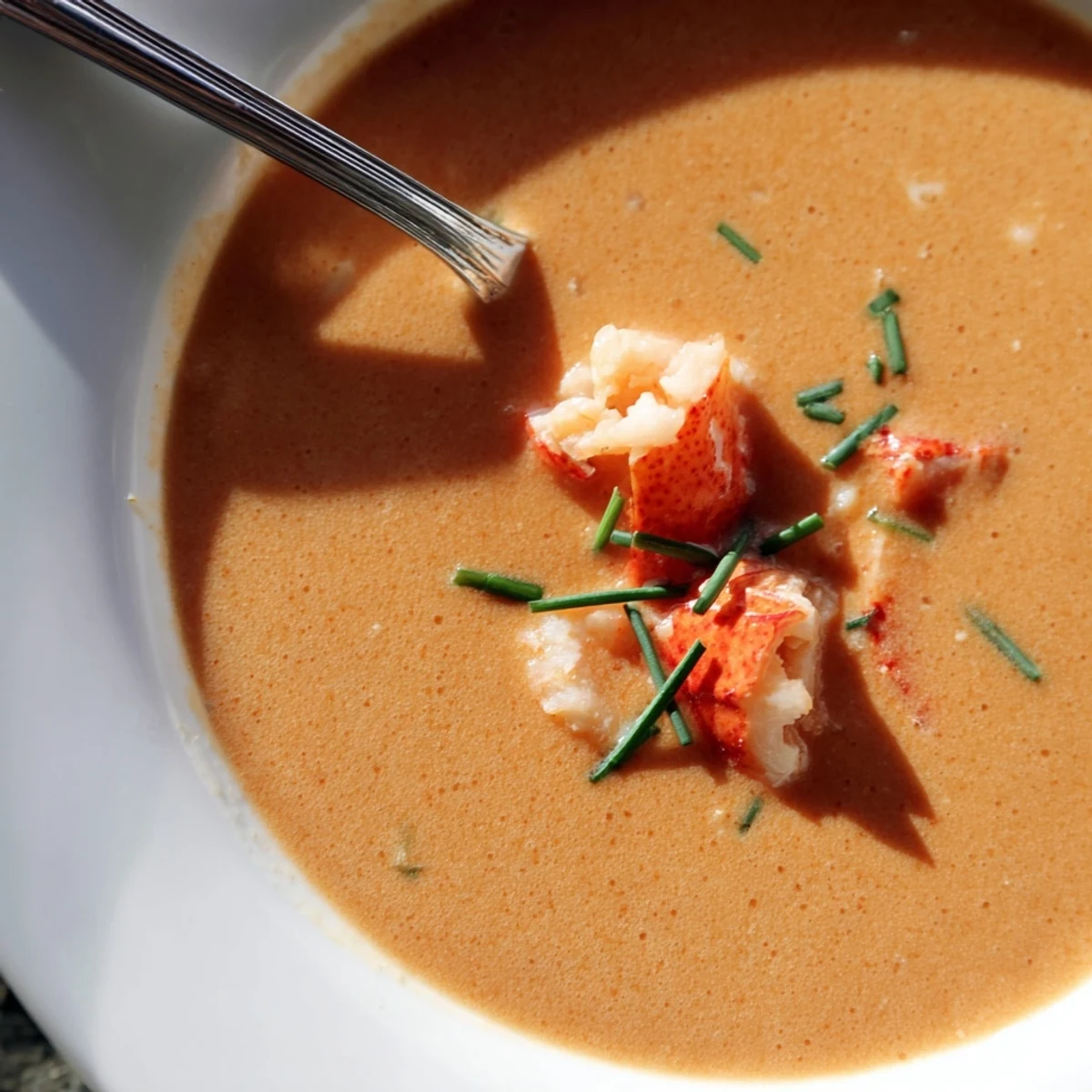
Save This luxurious lobster bisque showcases smooth, rich flavors without the use of brandy. Whole lobsters provide a deep seafood essence, combined with sautéed aromatics like onion, celery, and carrot. Tomato paste and a touch of white wine create a balanced base enhanced by seafood stock. The bisque is puréed for a velvety texture, finished with heavy cream and delicately spiced with paprika and optional cayenne. Served garnished with fresh herbs and lemon wedges, it makes an elegant starter or main course.
The first spoonful hit me by surprise—silky, sweet, with that unmistakable ocean richness clinging to the roof of my mouth. I was testing this bisque on a rainy Tuesday, shells crackling under my wooden spoon, steam fogging up the kitchen window. I didn't expect it to taste like something you'd order at a white-tablecloth restaurant, but it did.
I made this for my in-laws on their anniversary, spooning it into shallow bowls with a little pile of lobster meat on top. My father-in-law, who never says much about food, scraped his bowl clean and asked if there was more. That's when I knew this recipe was a keeper.
Ingredients
- Whole lobsters: The shells are just as important as the meat here, they're what give the bisque that deep, sweet shellfish backbone.
- Unsalted butter: Use real butter, not margarine, it adds a roundness that olive oil just can't match.
- Yellow onion, celery, carrot: The classic French mirepoix base, don't skip the carrot, it brings a subtle sweetness that balances the brininess.
- Garlic: Fresh only, the jarred stuff tastes flat and won't bloom the same way in the butter.
- Tomato paste: This thickens the bisque and adds a gentle acidity that brightens everything.
- Dry white wine: A crisp Sauvignon Blanc or unoaked Chardonnay works best, nothing sweet.
- Seafood or fish stock: Homemade is ideal, but a good quality store-bought works if you check the sodium.
- Heavy cream: This is what makes it a bisque, don't substitute with milk or half-and-half.
- Bay leaf, paprika, cayenne: Layered warmth without overpowering the delicate lobster.
- Fresh chives or tarragon: A bright herbal note at the end that cuts through the richness.
Instructions
- Prep the lobster:
- Pull the meat from the shells gently, trying to keep the pieces intact. Refrigerate the meat and keep every shell, even the small leg pieces, they all add flavor.
- Soften the aromatics:
- Melt butter over medium heat and add your chopped onion, celery, and carrot. Stir occasionally until they're soft and starting to smell sweet, about 6 minutes.
- Bloom the garlic and tomato paste:
- Add minced garlic and tomato paste, stirring constantly for 2 minutes. You'll smell the garlic turn nutty and the paste will darken slightly, that's when it's ready.
- Toast the shells:
- Toss in the lobster shells and stir them around for 4 minutes. They'll turn a deeper red and start to smell toasty and oceanic.
- Deglaze with wine:
- Pour in the white wine and scrape up all the caramelized bits stuck to the bottom. Let it simmer for 2 minutes until the alcohol smell fades.
- Build the broth:
- Add stock, bay leaf, paprika, and cayenne. Bring it to a boil, then lower the heat and let it simmer uncovered for 30 minutes, the liquid should reduce and concentrate.
- Blend until silky:
- Fish out the shells and bay leaf, then blend the soup until it's completely smooth. If you want it extra velvety, strain it through a fine mesh sieve.
- Finish with cream:
- Stir in the heavy cream over low heat and simmer gently for 5 minutes. Don't let it boil or the cream might break.
- Add the lobster:
- Drop in the lobster meat (save a few pretty pieces for garnish), season with salt and pepper, and warm through for 2 to 3 minutes. Serve hot with herbs and lemon on the side.
 Save
Save I once served this to a friend who said she didn't like lobster. She finished two bowls and asked for the recipe on her way out the door. Sometimes the right preparation changes everything.
Make It Even Better
Roasting the lobster shells in a hot oven before simmering them adds a smoky depth that makes the bisque taste like it came from a coastal bistro. It's an extra step, but if you have the time, it's worth it.
Swaps and Substitutions
If lobster isn't available or feels too expensive, shrimp shells and meat work beautifully here. You can also use crab shells for a slightly sweeter, more delicate bisque.
Serving and Pairing
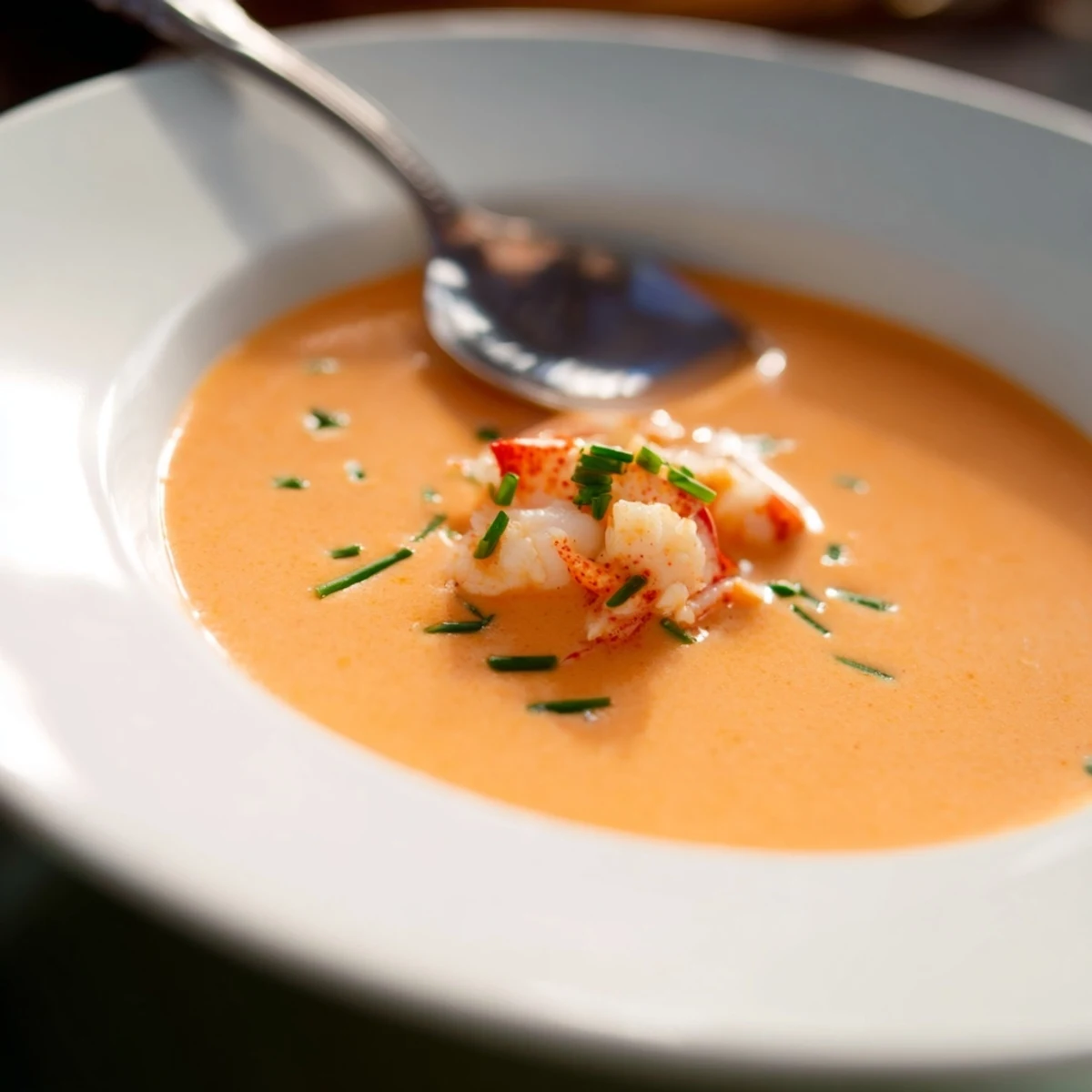
This bisque shines as a starter before roasted chicken or a simple pasta, but it's rich enough to be the main event with a crisp salad and crusty bread. A chilled glass of unoaked Chardonnay or Sauvignon Blanc cuts through the cream and echoes the wine in the pot.
- Ladle it into wide, shallow bowls so the garnish sits pretty on top.
- Serve with warm baguette slices or garlic crostini for dipping.
- Leftovers keep for up to 3 days and taste even more intense the next day.
 Save
Save This bisque has become my go-to when I want to impress without the stress. It feels fancy, tastes luxurious, and always makes people lean back in their chairs with that satisfied sigh.
Recipe FAQ
- → How do you extract maximum flavor from lobster shells?
-
Simmering the shells slowly in the pot helps release deep seafood flavors. Roasting them beforehand at 400°F for 10 minutes intensifies the taste.
- → Can I substitute another shellfish for lobster?
-
Shrimp shells and meat can be used as an alternative, providing a similar seafood richness to the bisque.
- → What is the purpose of tomato paste in the bisque?
-
Tomato paste adds a subtle depth and balanced acidity, enhancing the overall complexity of the broth.
- → How do you achieve the bisque's creamy texture?
-
Pureeing the soup base until smooth and stirring in heavy cream towards the end creates a voluptuous and creamy consistency.
- → What herbs are best for garnishing this bisque?
-
Fresh chives or tarragon offers an aromatic, bright finish that complements the rich seafood flavors perfectly.
- → Is it important to avoid boiling after adding lobster meat?
-
Yes, gently heating without boiling preserves the lobster’s delicate texture and prevents toughness.