
 Save
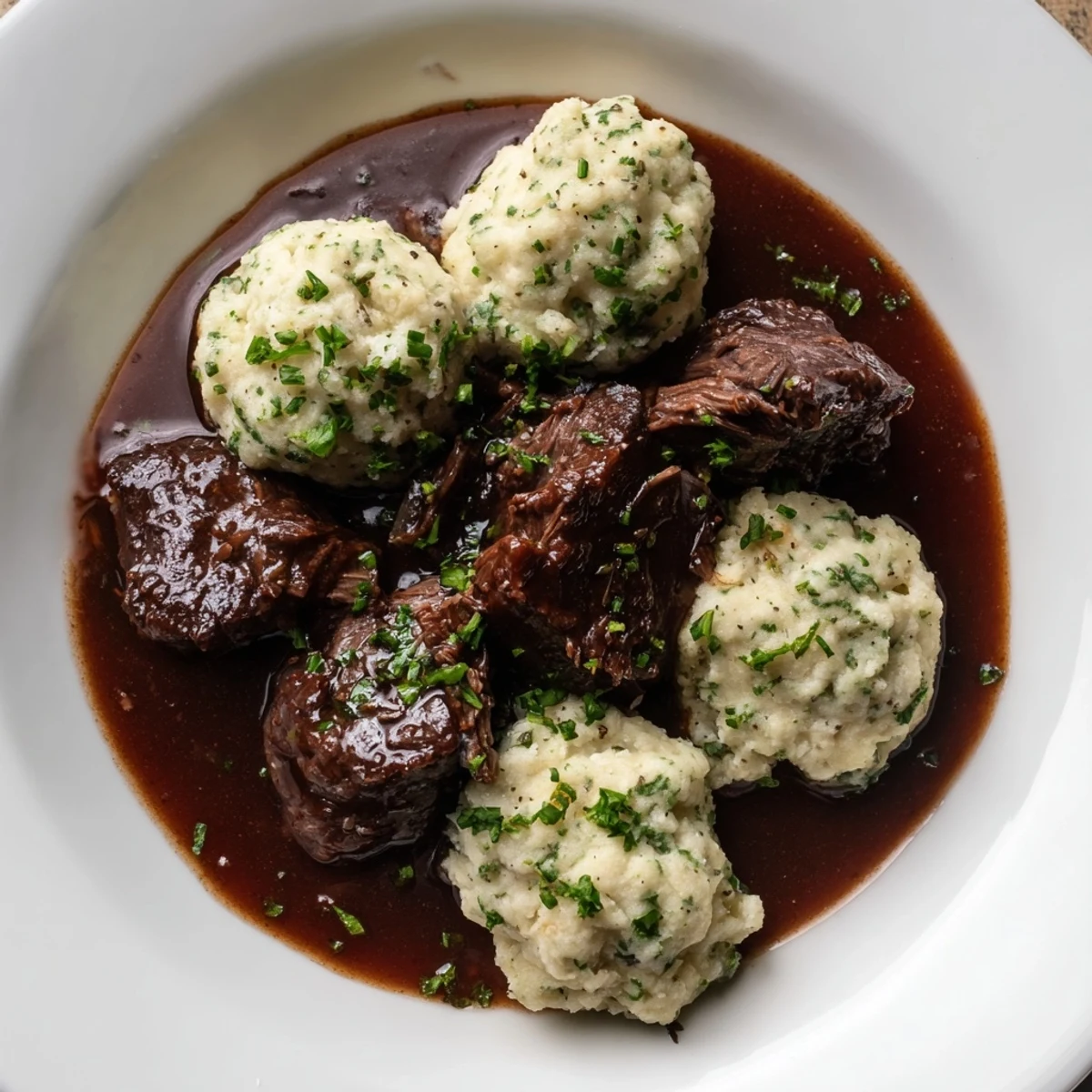
Save This dish features beef shin slowly braised in a rich, aromatic gravy infused with onions, garlic, and herbs. Fluffy dumplings made from self-raising flour, butter, and fresh parsley and chives are cooked on top, soaking up the flavors while adding a soft, herbaceous complement. Ideal for a comforting main, this hearty meal brings warmth and satisfying texture, perfect for cooler days.
I came across beef shin at the butcher on a grey January afternoon, cheaper than I expected and marbled with promise. The butcher said it needed time, so I gave it exactly that. What emerged hours later was something I hadn't planned for: a dish that tasted like patience itself, rich and falling apart at the touch of a spoon.
I made this the first time for my sister after she'd had a long week. She sat at the table and didn't say much, just kept going back for more. By the end, she looked up and said it reminded her of something our grandmother used to make, though I'm not sure it did.
Ingredients
- Beef shin: This cut transforms completely when braised low and slow, the connective tissue melting into the sauce and making it glossy and full.
- Plain flour: A light coating helps the beef brown evenly and later thickens the gravy without any lumps.
- Vegetable oil: I use this for browning because it handles high heat better than butter and doesn't burn.
- Onions: Sliced thick, they soften into sweet, silky ribbons that blend right into the sauce.
- Carrots and celery: They add a subtle sweetness and body to the braise, breaking down just enough to enrich the gravy.
- Garlic: Finely chopped so it melts into the background, adding warmth without sharpness.
- Tomato paste: Cooking it for a couple of minutes deepens the color and adds a slight tang that balances the richness.
- Beef stock: The backbone of the braise, it should be good quality or the whole dish will taste flat.
- Red wine: It brings acidity and depth, cutting through the fat and making every spoonful more interesting.
- Bay leaves and thyme: These herbs quietly season the stew as it cooks, leaving behind an earthy fragrance.
- Self-raising flour: The key to light dumplings that rise properly and stay fluffy inside.
- Cold butter: Rubbed into the flour, it creates pockets of richness that make the dumplings tender.
- Fresh parsley and chives: They add a pop of green and a subtle freshness that keeps the dumplings from feeling too heavy.
- Cold water: Just enough to bring the dough together without overworking it.
Instructions
- Preheat and prep the beef:
- Set your oven to 160°C and toss the beef shin in flour, shaking off the excess so you're left with a thin, even coating. This will help it brown beautifully and thicken the sauce later on.
- Brown the beef:
- Heat the oil in your casserole until it shimmers, then brown the beef in batches without crowding the pan. You want a deep golden crust on each piece, so don't rush this step.
- Soften the vegetables:
- Add the onions, carrots, and celery to the same pot, letting them cook in the beef fat until they start to soften and smell sweet. Stir in the garlic and let it cook for just a minute before adding the tomato paste.
- Build the braise:
- Return the beef to the pot, pour in the stock and wine, and tuck in the bay leaves and thyme. Season with pepper and salt, then bring it to a gentle simmer before covering and sliding it into the oven.
- Slow-cook the stew:
- Let it cook undisturbed for 2 hours. The low heat will coax the beef into tenderness and the liquid into a thick, glossy gravy.
- Make the dumpling dough:
- While the stew braises, rub the cold butter into the flour with your fingertips until it looks like coarse breadcrumbs. Stir in the herbs and salt, then add the cold water bit by bit until the dough just comes together.
- Shape the dumplings:
- Divide the dough into 8 pieces and roll them gently into balls. Don't overwork them or they'll turn out dense.
- Add the dumplings:
- After 2 hours, take the casserole out and nestle the dumplings on top of the stew, spacing them evenly. Cover again and return to the oven for another 30 minutes until they've puffed up and cooked through.
- Finish and serve:
- Pull out the bay leaves and thyme sprigs, then ladle the stew and dumplings into bowls. Serve it hot, maybe with a scattering of fresh herbs if you have them.
 Save
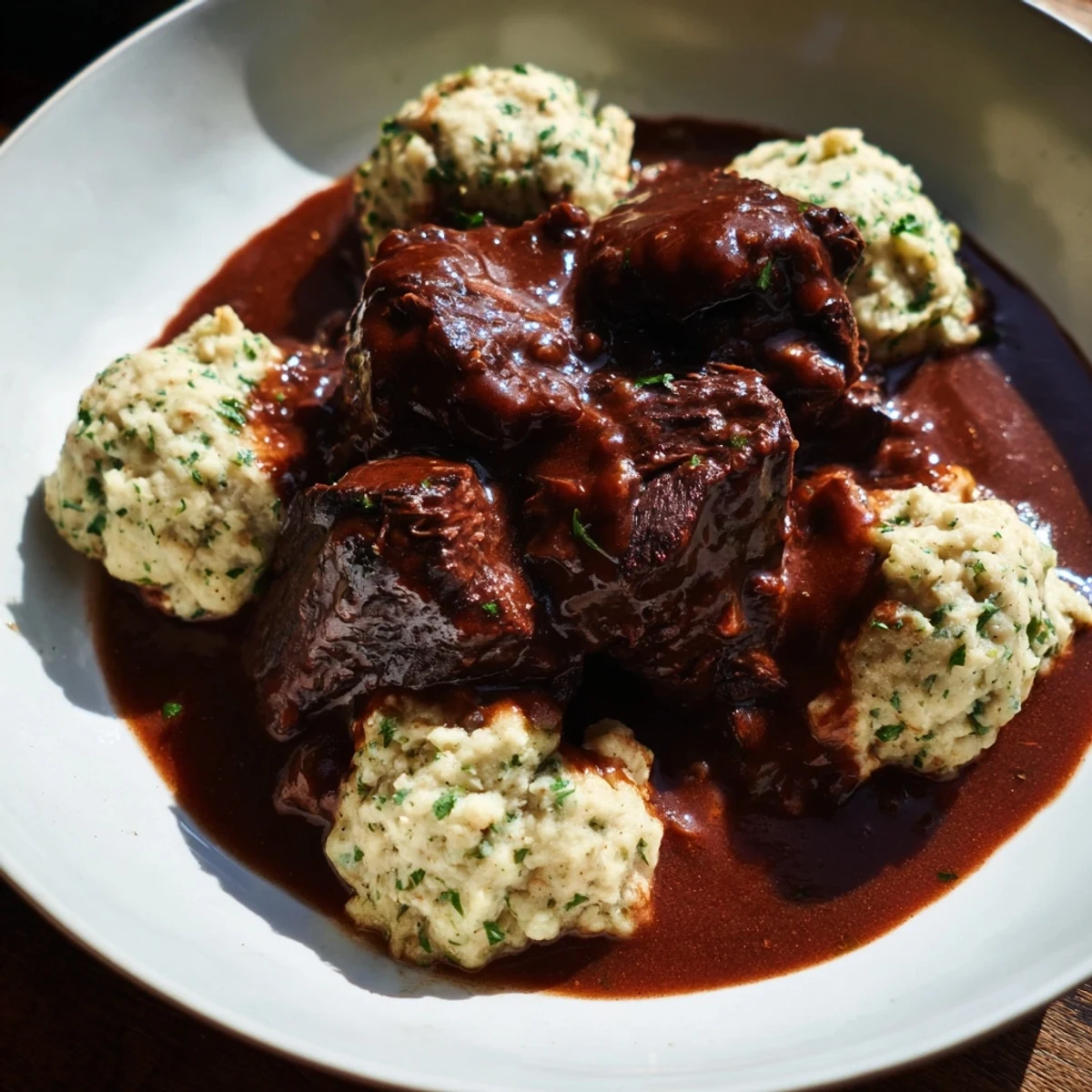
Save There's a moment when you lift the lid after those final 30 minutes and see the dumplings sitting there, golden and swollen, and the whole room smells like a Sunday that never had to end. That's when this dish stops being effort and starts being worth it.
What to Serve Alongside
I like to keep it simple with steamed greens or buttered cabbage, something that won't compete with the richness. Mashed potatoes work too, though honestly the dumplings do most of the carb work already.
How to Store and Reheat
The stew keeps well in the fridge for up to 3 days and tastes even better the next day once the flavors have settled. Dumplings don't reheat as well, so if you're planning leftovers, consider making a smaller batch and adding fresh ones when you reheat the stew.
Little Tweaks That Work
A splash of Worcestershire sauce stirred in before serving adds a quiet depth that people notice without knowing why. If you don't have red wine, use all stock and add a tablespoon of balsamic vinegar for balance.
- Try rosemary or tarragon in the dumplings if you want a different herby note.
- For a richer gravy, stir in a teaspoon of Dijon mustard at the end.
- If you like heat, a pinch of smoked paprika in the flour coating works wonders.
 Save
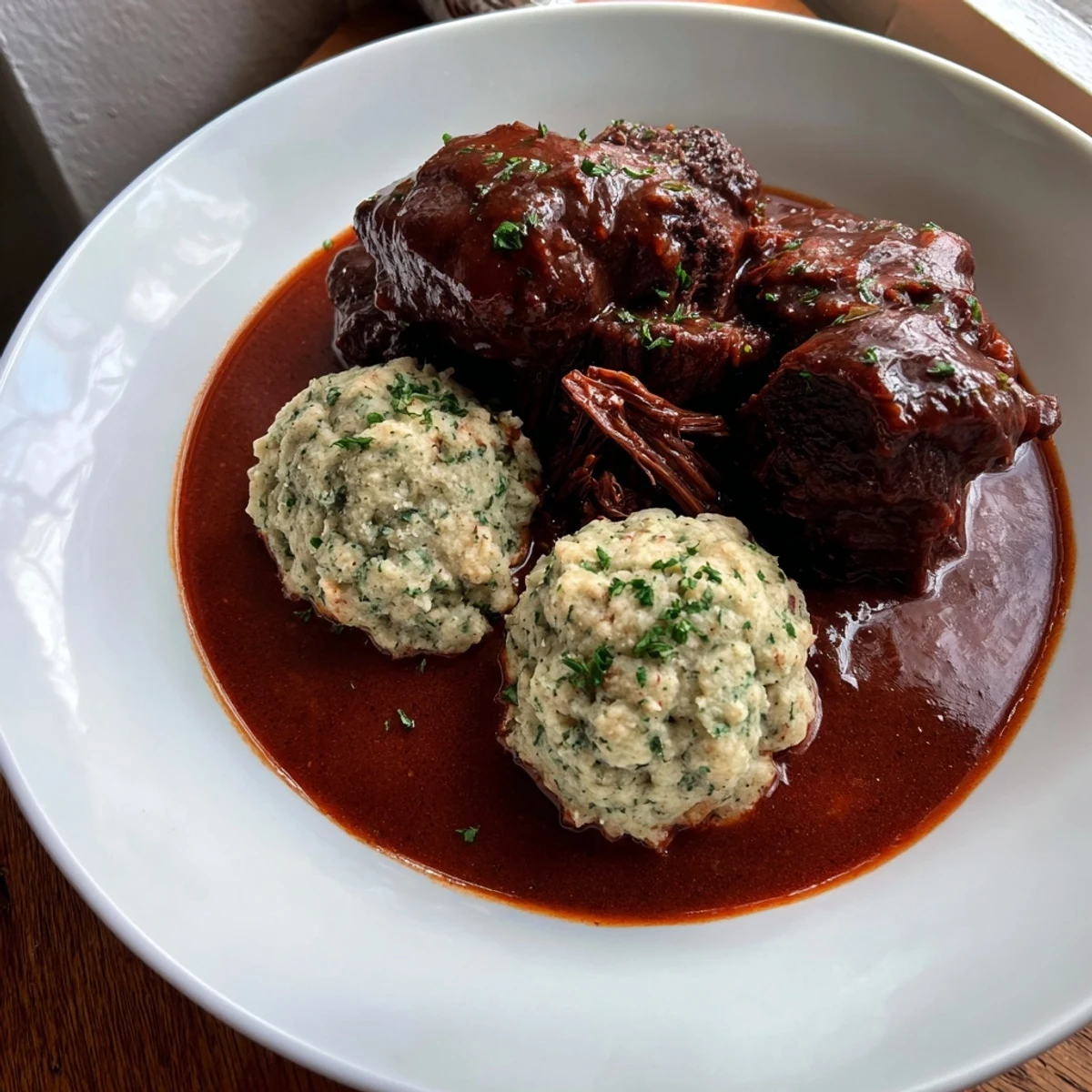
Save This is the kind of meal that asks for nothing but time, and gives back more than you put in. Make it when the day feels long and you want something warm waiting at the end.
Recipe FAQ
- → What cut of beef is best for this dish?
-
Beef shin is ideal due to its rich collagen content, becoming tender and flavorful when slow-cooked.
- → Can I substitute red wine in the gravy?
-
Yes, additional beef stock can replace red wine without losing moisture or depth in flavor.
- → How should I prepare the dumplings for best texture?
-
Rub cold butter into flour until crumbly, then gently mix in herbs and cold water to create a soft dough before shaping dumplings.
- → What herbs complement the dumplings?
-
Fresh parsley and chives add a mild, fresh note, but rosemary or tarragon can be used for varied flavors.
- → How long should the beef be cooked for tenderness?
-
Approximately 2 hours slow cooking in the oven ensures the beef shin becomes tender and infused with flavors.
- → Can this dish be served with side vegetables?
-
Steamed greens or creamy mashed potatoes pair well, balancing the richness and adding bulk to the meal.