
 Save
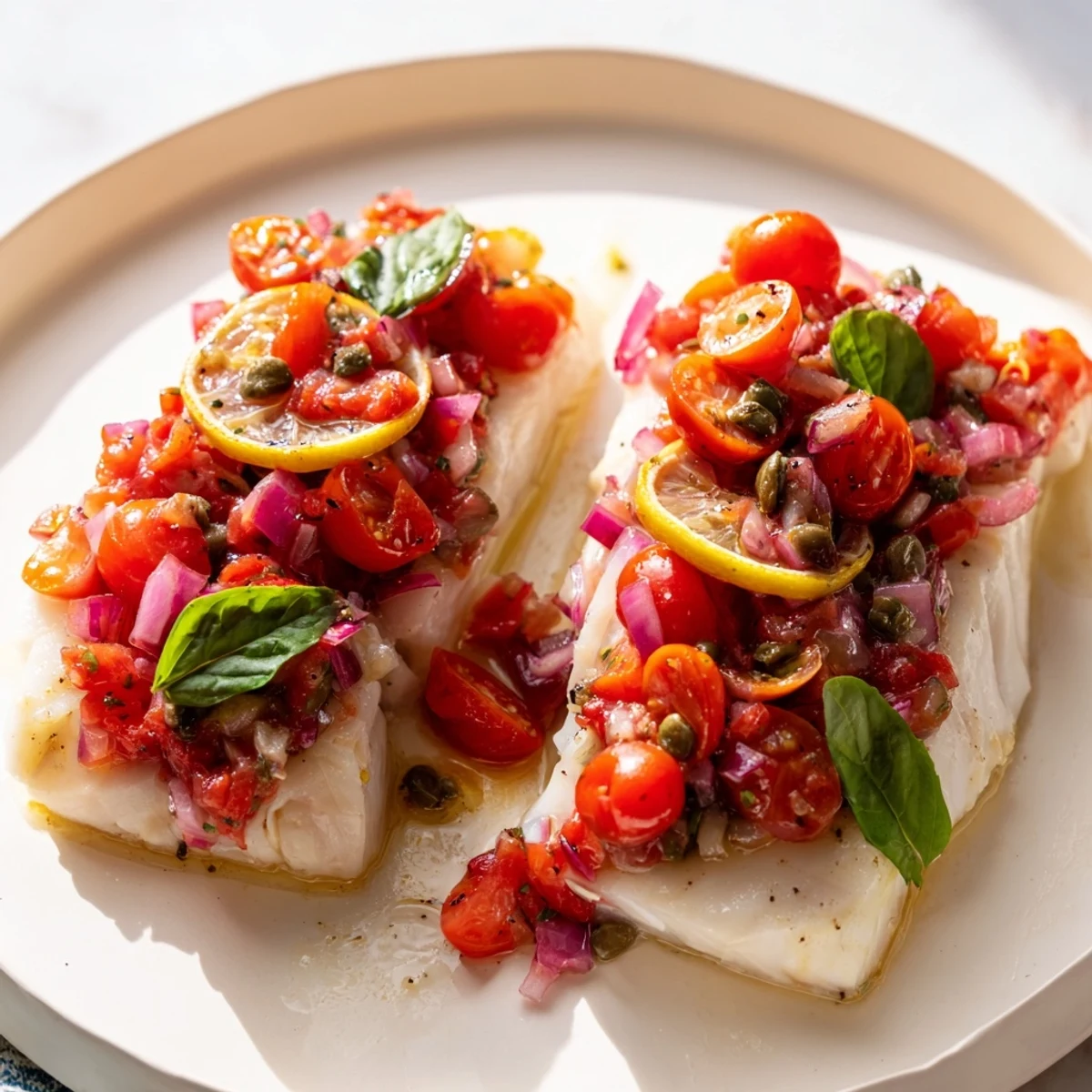
Save This dish features tender halibut fillets oven-baked until flaky and juicy, enhanced by a bright and flavorful tomato-basil relish. The relish combines cherry tomatoes, fresh basil, red onion, capers, olive oil, balsamic vinegar, and garlic to create a vibrant topping that complements the mild fish perfectly. Lemon slices add freshness during baking, while seasoning with salt and pepper rounds out the taste. Ideal for a gluten-free, low carb main course with Mediterranean flair, this dish is simple to prepare and impressive on the plate.
I picked up halibut on a whim one Saturday, drawn to its snowy fillets at the market. At home, I panicked slightly, realizing I had no plan, until I spotted cherry tomatoes and basil on the counter. Twenty minutes later, I pulled golden, lemon-crowned fish from the oven and spooned on a relish so bright it tasted like summer.
The first time I made this for friends, I plated each fillet with a generous heap of relish and passed around extra basil. Someone said it tasted like a meal you'd order by the water, and I realized that simplicity, done right, feels like a small luxury.
Ingredients
- Halibut fillets: Choose thick, even pieces so they cook at the same rate, and pat them very dry or the seasoning won't stick.
- Olive oil: Use a mild one for baking the fish and save your best extra-virgin for the relish, where its flavor really shines.
- Lemon slices: Lay them right on top of the fillets so their juice seeps into the flesh as it bakes, adding a quiet brightness.
- Cherry tomatoes: Quartering them releases their juice, which mingles with the oil and vinegar to form a light, tangy dressing.
- Fresh basil: Chop it just before mixing so it stays green and fragrant, not bruised or bitter.
- Red onion: A small dice gives a little bite without overwhelming the delicate fish.
- Capers: Rinse and chop them if they are large, they add a briny punch that balances the sweetness of the tomatoes.
- Balsamic vinegar: Just a tablespoon is enough to add depth without making the relish too acidic.
- Garlic: One small clove, minced fine, disappears into the relish but leaves a warm, savory trace.
Instructions
- Preheat and Prep:
- Heat your oven to 400 degrees and line a baking sheet with parchment so the fish releases easily. This step takes two minutes and saves you from scrubbing later.
- Season the Halibut:
- Dry the fillets with paper towels, drizzle them with olive oil, and season both sides with salt and pepper. Lay lemon slices on top, pressing gently so they stay put.
- Bake Until Flaky:
- Slide the sheet into the oven and bake for 15 to 18 minutes, checking at 15 if your fillets are on the thinner side. The fish is done when it turns opaque and flakes with the gentlest nudge of a fork.
- Make the Relish:
- While the fish bakes, toss quartered tomatoes, basil, red onion, capers, olive oil, vinegar, and garlic in a bowl. Season with salt and pepper, taste, and adjust if needed.
- Plate and Serve:
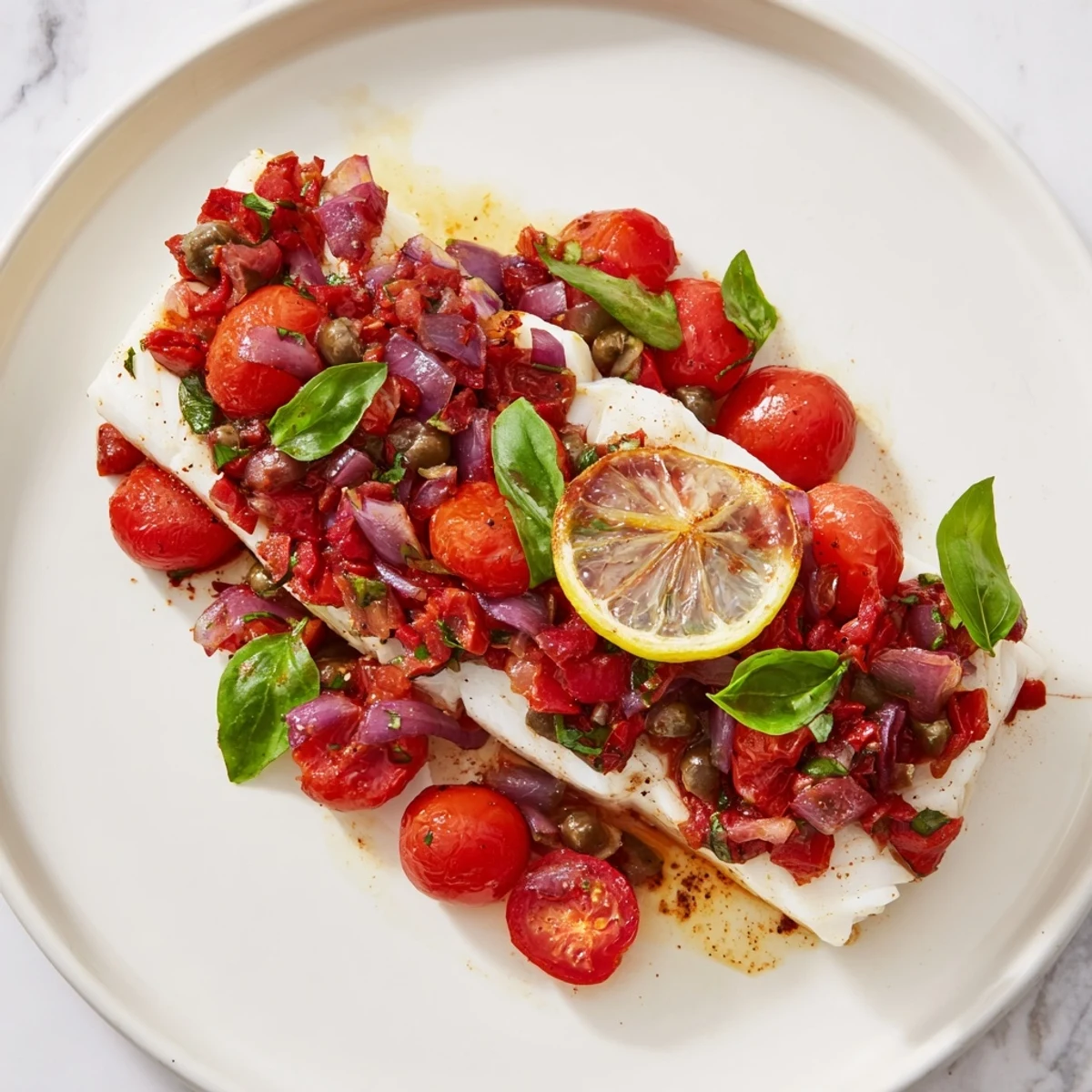
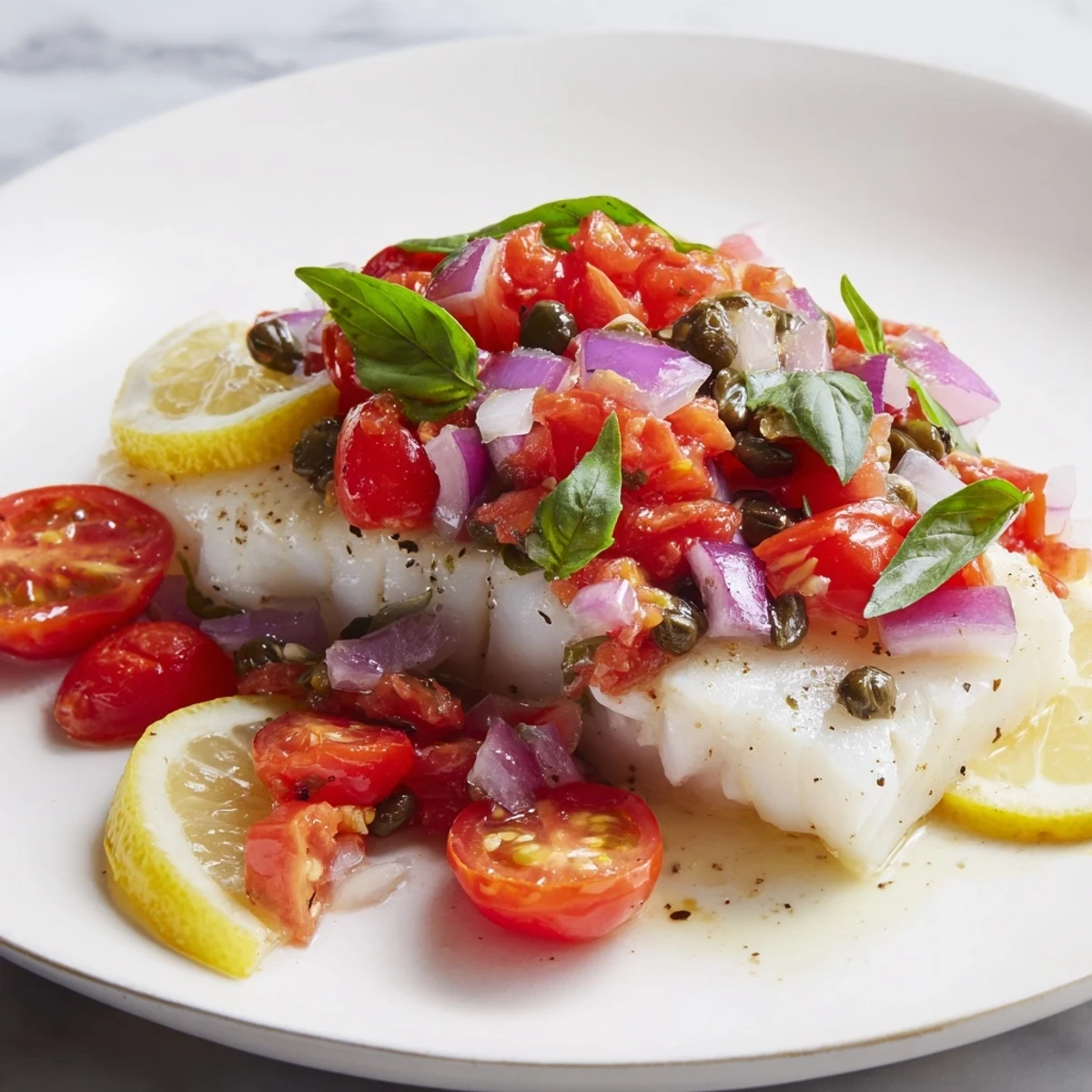
- Transfer each fillet to a plate and spoon the relish generously over the top, letting some of it pool around the edges. Serve right away while the fish is hot and the relish is cool and bright.
 Save
Save One evening I served this to my mom, who does not usually like fish. She finished every bite and asked for the relish recipe, and I realized that freshness and a little acid can win over almost anyone.
Pairing and Serving Suggestions
I like to serve this with roasted fingerling potatoes or a tangle of sauteed greens, something that can soak up the relish juices. A crisp white wine, Sauvignon Blanc or Pinot Grigio, cuts through the richness of the fish and echoes the brightness of the tomatoes.
Swaps and Variations
If halibut is hard to find or feels too pricey, try cod or sea bass, both hold up well in the oven and taste mild enough to let the relish shine. You can also marinate the fish in olive oil, lemon juice, and a pinch of herbs for half an hour before baking, which adds another layer of flavor without much effort.
Storage and Make-Ahead Tips
Baked halibut is best eaten right away, but leftovers keep in the fridge for a day and can be flaked into a salad or grain bowl. The relish holds up better, staying bright and tangy for up to two days, just give it a stir before spooning it over reheated fish or grilled chicken.
- Store the fish and relish separately so the fish does not get soggy.
- Reheat the halibut gently in a low oven, covered with foil, to keep it from drying out.
- If the relish tastes flat after sitting, add a squeeze of fresh lemon or a pinch of salt to wake it up.
 Save
Save This dish taught me that elegance does not require complexity, just good fish, ripe tomatoes, and the willingness to let simple things taste like themselves. I hope it becomes a favorite in your kitchen too.
Recipe FAQ
- → What type of fish works best for this dish?
-
Halibut is preferred for its firm, flaky texture, but cod or sea bass can be used as alternatives.
- → Can I prepare the relish ahead of time?
-
Yes, the tomato-basil relish can be made a few hours in advance to let the flavors meld nicely.
- → How do I know when the halibut is cooked?
-
The fish is done when it becomes opaque and flakes easily with a fork, usually after 15–18 minutes baking at 400°F.
- → Are there any suggested wine pairings?
-
A crisp Sauvignon Blanc or a light Pinot Grigio complements the fresh flavors of the dish well.
- → Is this dish suitable for gluten-free diets?
-
Yes, the ingredients are naturally gluten-free; just ensure capers and vinegar are checked for any additives.